
Why Security by Design Protects NYC Buildings Better Than Checkbox Security
Key Takeaways
Checkbox security installs equipment to satisfy compliance requirements or insurance mandates. Security by design evaluates how a building actually operates before selecting or positioning any technology.
The most common checkbox failure pattern is not missing hardware. It is hardware in the wrong position, covering the wrong area, with no integration between systems, installed by someone who never asked how the building actually functions.
Integrated platforms connecting cameras, alarms, and access control dramatically improve incident response by eliminating the cross-referencing delay between separate systems. When an event occurs, context is immediate rather than reconstructed manually.
NYC commercial buildings are particularly exposed to checkbox security gaps because delivery volume, tenant turnover, and mixed-use traffic patterns create dynamic conditions that static, compliance-driven deployments do not account for.
Transitioning from checkbox to design-based security does not always require replacing hardware. In many cases a professional assessment, credential policy corrections, camera repositioning, and system integration improvements deliver meaningful risk reduction without starting over.
Walk into most commercial buildings in New York City and the security hardware is visible. Cameras on the ceiling. Card readers at the entrance. An intercom panel by the front door. To a casual observer, and to a compliance inspector with a checklist, the building has security.
Then an incident happens. The camera above the service door was positioned to satisfy a coverage requirement and captures only the tops of visitors' heads. The access control system at the main entrance was never connected to the alarm platform, so the two cannot be cross-referenced without manual effort across separate interfaces. Contractor credentials from a project that ended eight months ago are still active.
The hardware existed. The security did not.
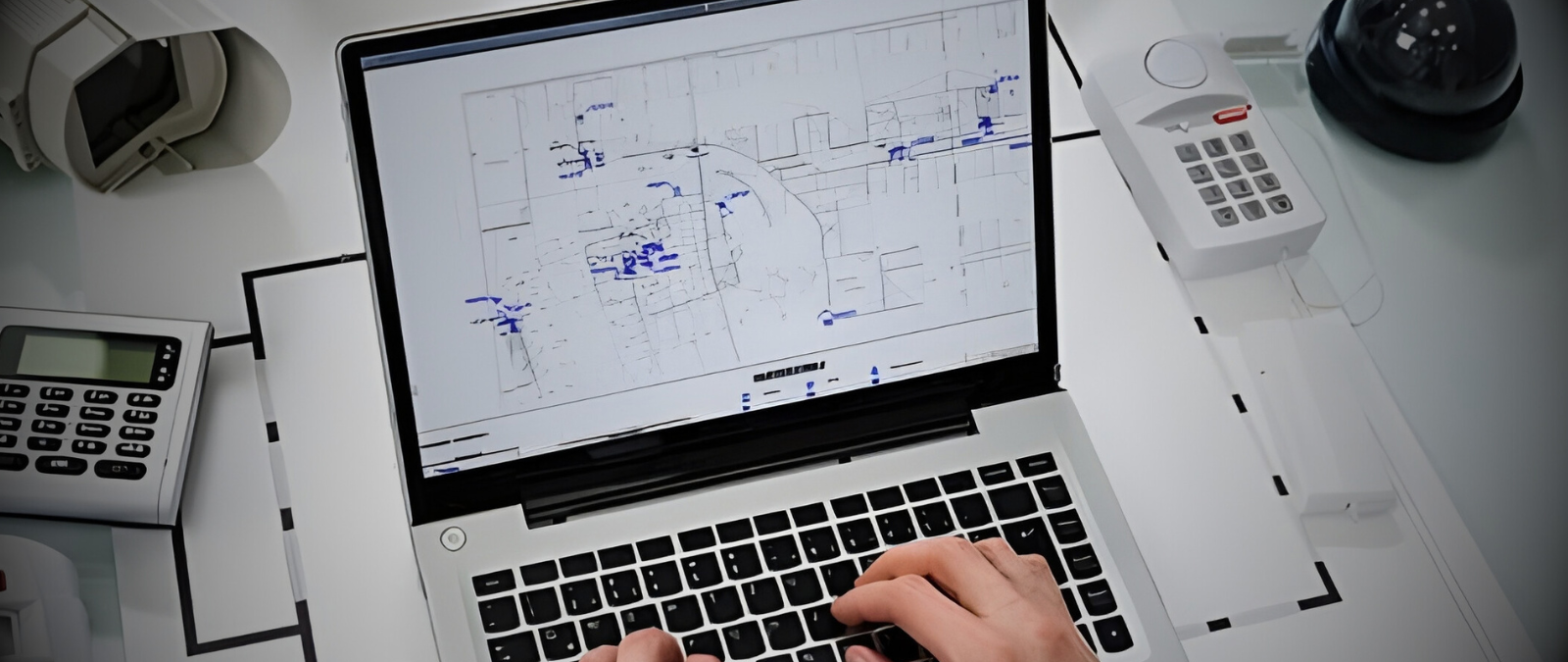
This is checkbox security: systems installed to meet a requirement rather than engineered to address the actual risk environment of the specific building they are in. It is the norm in commercial real estate, and understanding what it costs compared to security by design is what motivates most organizations that eventually invest in a proper security assessment.
What Checkbox Security Actually Looks Like in Practice
Checkbox security happens when security decisions are driven by the requirement rather than the risk. A property manager is told the building needs cameras, an intrusion alarm, and electronic access control. Vendors install the equipment, confirm each component powers on, and the project closes. From a compliance perspective, the building now has security systems.
From an operational perspective, the systems were never designed around how the building functions, who moves through it, when, and where the actual vulnerabilities concentrate. Common checkbox patterns that security assessments identify repeatedly in NYC commercial buildings: cameras covering hallways at angles too high to produce usable facial detail for investigation. Access control at front entrances while service corridors and loading docks remain uncontrolled during peak delivery hours.
Alarm systems that generate alerts with no camera integration, requiring manual footage review to understand what triggered. Credential databases never maintained after initial setup, with former employee and contractor credentials accumulating over years. None of these represent equipment failure. They represent design failure that installation completed without questioning.
What Security by Design Starts With
Security by design begins with a question that checkbox installations almost never ask: how does this building actually operate? The answer to that question is the foundation of a security architecture that works.
A security engineer evaluating a Manhattan commercial property examines how tenants enter during the morning rush, where delivery traffic concentrates during the afternoon, how cleaning crews access the building overnight, where contractors move and what they need to access, and how front desk coverage gaps create windows of unmanaged entry.
Those patterns determine where security measures should be concentrated, what integration between systems is necessary for effective response, and what credential management policies need to be in place to keep the access control architecture meaningful over time. The result is a security environment that reflects operational reality rather than a generic deployment of the required device categories.
Modern platforms from manufacturer partners including Axis Communications, Avigilon, Bosch Radionix, Milestone Systems, 2N, and Alarm.com support this approach because they are built for flexible, integrated deployment rather than standalone compliance checkboxes. The technology serves the architecture. The architecture serves the risk profile of the specific building.

The Service Entrance Problem That Appears in Most NYC Commercial Buildings
The most consistent example of checkbox security in NYC commercial buildings is service entrance coverage. The main lobby cameras are well-positioned because that is where compliance attention concentrates. The rear service entrance, loading dock, or secondary stairwell camera was positioned to exist rather than to capture usable information.
A repositioned camera at a service entrance, integrated with an access control reader that logs every credential event and associates it with the corresponding video clip, is a meaningful security improvement. The hardware investment is modest. The design change is what produces the capability. This pattern applies broadly. When an integrated system connects access control events, surveillance footage, and alarm triggers into a shared event layer, a door opening after hours automatically surfaces the associated camera view and access log entry in a single interface.
Investigation that previously required cross-referencing three separate systems takes seconds rather than minutes. Alarm.com provides exactly this unified management layer for commercial deployments, and Milestone Systems VMS supports enterprise-scale surveillance integration for larger properties. The contrast between a building with integrated security by design and one with checkbox systems running independently is most apparent when something requires investigation. One produces immediate context. The other produces a manual research project.
Why NYC's Operational Environment Amplifies Checkbox Gaps
The specific conditions of NYC commercial building operations make checkbox security's weaknesses more consequential than they would be in lower-complexity environments. Delivery volume in Manhattan commercial buildings means that entry management through a legacy intercom system, managed by front desk staff taking calls across a shared phone system, is tested hundreds of times daily.
Verification quality degrades as volume increases. Checkbox access control that requires full staff attention for every entry interaction does not scale to the actual operational demand. Tenant turnover generates a constant stream of credential lifecycle events. A credential management practice that was adequate at initial setup becomes a growing liability as years of tenant changes accumulate without systematic deactivation. Checkbox access control that was compliant on day one carries hundreds of ghost credentials by year three.
Mixed-use occupancy creates access complexity that a single front-entrance card reader was never designed to manage. Residential tenants, commercial office users, retail customers, and service vendors all need different access rules for different spaces at different times. A system installed to check the access control box without being designed for that occupancy complexity will be misconfigured relative to the actual access requirements almost immediately.
For residential and multifamily buildings, commercial office properties, and hospitality facilities, the operational case for security by design over checkbox compliance is not abstract. It is the difference between systems that manage the building's actual security environment and systems that were installed once and have been drifting from that environment ever since.
Intercom and Entry: Where Checkbox Security Fails Most Visibly
Building entry points are where checkbox security produces the most visible failures because they are where the security posture meets the most daily operational pressure. Many commercial buildings still use audio-only intercom systems that satisfy the technical requirement for visitor communication while providing no verification capability. Staff hear a voice, make a judgment, and release the door. No visual confirmation. No entry log. No correlation with surveillance. Technically compliant. Operationally inadequate.
Modern video intercom systems from 2N, which is part of Axis Communications, allow visual visitor confirmation before any access decision is made, generate timestamped entry logs with associated video, and integrate with access control and surveillance platforms so every visitor interaction is a documented event rather than an unrecorded judgment call. The 2N versus legacy intercom guide covers this transition in detail, including the specific capabilities that differentiate engineered video entry from audio-only checkbox compliance.
Liability and the Documentation Difference
Security by design also produces a meaningfully different legal and insurance posture than checkbox security. When an incident occurs in a commercial building and liability is examined, the relevant question is not whether security hardware was present. It is whether foreseeable risks were identified and reasonable steps were taken to address them.
A building that can produce a formal assessment report, an engineering design with documented placement rationale, and commissioning records showing that systems were verified before handoff is in a fundamentally different position than one that can produce equipment invoices. For high-value commercial properties in Manhattan, where liability exposure from security incidents can escalate quickly and where insurance carriers scrutinize security documentation increasingly closely, the documentation produced by a security-by-design process is not a side benefit. It is one of the core deliverables.

How to Transition From Checkbox to Design-Based Security
The transition does not always require replacing every system component. In many cases, a professional security assessment reveals that the existing hardware can deliver substantially better security performance through repositioning, integration, and credential policy correction rather than replacement. Camera repositioning to address identification-quality coverage gaps.
Integration between surveillance and access control platforms to create unified event context. Credential lifecycle management policy implementation to address the accumulated ghost credential problem. These improvements follow from an assessment-driven understanding of where the actual gaps are. They are targeted, justified, and measurable in their impact on the building's real security posture. Where hardware does need replacement, as in service entrance cameras that are fundamentally positioned incorrectly or legacy audio intercoms that cannot provide visual verification, the assessment provides the documented rationale for that investment rather than leaving the decision to a vendor's recommendation.
The design-first sequence, where assessment precedes specification and specification precedes installation, is what differentiates security engineering from checkbox procurement. Why security assessment, engineering, and commissioning matter more than installation addresses why that sequence consistently produces better security outcomes and lower aggregate cost than the reverse.
FAQs
What is the difference between security by design and checkbox security?
Security by design evaluates how a building actually operates, including traffic patterns, occupancy mix, access workflows, and operational procedures, before selecting or positioning any security technology. Equipment decisions follow from that analysis. Checkbox security installs the required device categories to satisfy a compliance requirement or insurance mandate without evaluating whether the specific implementation addresses the building's real risk environment. The hardware may be identical. The design process, and therefore the operational outcomes, are fundamentally different.
How do I know if my NYC building has checkbox security rather than security by design?
The most direct indicators are: cameras positioned to exist rather than to capture usable identification-quality footage, access control credentials that are never systematically deactivated when staff or tenants change, surveillance and access control systems that cannot be cross-referenced without manual effort across separate platforms, and no formal assessment documentation showing that placement decisions were based on risk analysis. If an incident requiring investigation reveals that footage is unusable, entry logs are incomplete, or systems cannot be correlated, those are operational confirmations of checkbox security gaps.
Does transitioning to security by design require replacing all existing hardware?
Not necessarily. Many transitions from checkbox to design-based security involve repositioning existing cameras, integrating systems that already exist but do not communicate, implementing credential lifecycle management policies, and adding targeted coverage at specific high-risk areas identified in the assessment. Full hardware replacement is appropriate when equipment is functionally obsolete, non-compliant with current standards such as NDAA requirements, or positioned in ways that cannot be corrected without new installations. An assessment determines which category each component falls into rather than treating replacement as the default.
Why is integration between security systems so important for commercial buildings?
When cameras, alarms, and access control operate independently, every incident requires manual cross-referencing between separate platforms to reconstruct what happened. In high-traffic NYC commercial buildings where hundreds of daily entry interactions generate constant event data, that manual reconstruction process is slow, error-prone, and often inconclusive. Integrated platforms that connect access events, camera footage, and alarm triggers into a shared event layer make investigation immediate and documentation automatic. The same integration also enables proactive response: an after-hours door event that automatically surfaces the associated camera view allows security staff to assess and respond while the situation is developing rather than after.
How often should a commercial building's security design be formally reassessed?
Any significant change in building conditions warrants a reassessment: major renovation, significant tenant turnover, changes in occupancy mix, infrastructure upgrades, or management transitions. For stable buildings without major changes, a formal review every two to three years ensures that the security architecture remains aligned with how the building currently operates rather than how it operated when the last assessment was conducted. The security risk assessment guide for NYC properties covers the specific triggers and intervals in more detail.
Conclusion
The gap between a commercial building that appears secure and one that is secure is almost always traceable to how the security was designed rather than what equipment was installed. Checkbox security produces the appearance of protection. Security by design produces the actual thing. For NYC commercial property owners, the practical implication is straightforward. If the security systems in your building were installed to satisfy a requirement rather than engineered around how the building actually operates, the gaps that creates are being tested by your building's operational reality every day. An assessment that identifies those gaps before they appear in an incident investigation is the most cost-effective security investment most buildings can make. The hardware often does not need to change. The approach to it does.
Own or manage a NYC commercial building and not certain whether the security architecture reflects how the building actually operates or just what it was required to have?
Connextivity designs integrated security environments for commercial properties across New York City using technology from Axis, Avigilon, Bosch Radionix, Milestone Systems, 2N, and Alarm.com. Every engagement begins with a formal assessment before any equipment is specified. Schedule a security design consultation.
Related Articles