
Is Your NYC Building's Intercom Actually Secure? Legacy Systems vs. Modern Video Entry
Key Takeaways
Legacy analog intercoms provide audio communication and manual door release. They provide no visual verification, no entry logging, no remote management, and no integration with cameras or access control. In a high-traffic NYC commercial building, that combination is a documented liability gap.
Modern 2N IP video intercoms transform building entry into a documented security checkpoint. Every call generates a timestamped record with visitor photo or video, staff member who granted access, and correlation with access control and surveillance systems.
2N is part of Axis Communications, which means integration with Axis cameras and Axis Camera Station VMS is native rather than third-party. For buildings already using Axis surveillance, the intercom and camera systems share a unified management layer.
The gap between a legacy intercom "technically working" and actually supporting a building's security strategy is where most NYC commercial property liability exposure concentrates. The system answers. It does not document, verify, or integrate.
Upgrading from legacy analog to 2N IP video does not require days of building downtime. Properly phased installations in most NYC commercial buildings complete in hours per entry point with off-hours scheduling.
Most commercial buildings in New York City have an intercom that works. A visitor presses a button, someone answers, and the door unlocks. The system is functional. That is not the same as secure.
In a building where tenant turnover is constant, delivery traffic is relentless, front desk coverage has gaps, and liability documentation requirements are real, "technically works" is a low bar. Legacy analog intercoms were designed for communication convenience before visual verification, mobile access management, and integrated security platforms existed. Expecting them to support a modern commercial security strategy is asking a 1990s tool to solve a 2025 problem.
This post covers what legacy systems actually provide and what they do not, what the operational and liability gaps look like in practice, and what a 2N IP video intercom installation delivers differently for NYC commercial and mixed-use buildings.

What Legacy Analog Intercoms Actually Do
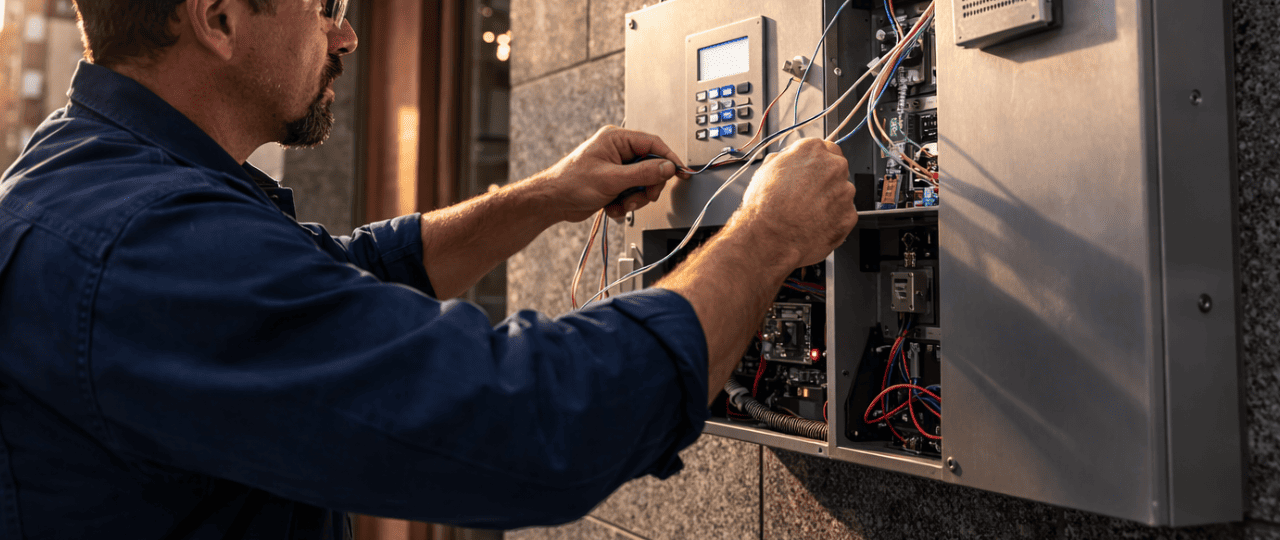
The majority of NYC commercial and mixed-use buildings constructed before 2010 have the same fundamental setup: analog intercom panels wired to desk phones or apartment units, with a manual door release button at the receiving end.
What that system provides is genuinely useful but narrow: audio-only two-way communication between a visitor at the entry point and a staff member or resident inside, a manual door release triggered by the person who answers, and a tenant directory that was accurate at installation and has drifted since.
What it does not provide is the part that matters for security. No visual verification of who is at the door before access is granted. No event logging that records who entered, when, which unit or staff member released the door, or how long the interaction lasted. No remote management capability that allows a property manager to handle after-hours access without being physically present. No integration with the building's surveillance cameras or access control platform. No mobile credentials or temporary digital access for contractors, service providers, or scheduled deliveries. No audit trail for investigating incidents after the fact.
In a low-traffic suburban office building where every visitor is known and expected, those gaps may be tolerable. In a Manhattan commercial building receiving dozens of deliveries daily, housing multiple tenants with frequent turnover, and operating with front desk gaps during lunch and after hours, each of those missing capabilities represents a specific operational and liability exposure.
The Liability Gap That Goes Unrecognized Until It Matters
The scenario that makes this concrete: an incident occurs involving an unauthorized visitor who was buzzed in by a front desk staff member who took the call remotely on their phone. The property manager tries to reconstruct what happened. When did the person enter? The intercom has no log. What did the person look like? The intercom is audio only. Who granted access and what did they ask the visitor? No recording exists. Can surveillance footage be correlated with the entry event? Only by manually reviewing hours of footage without a timestamp anchor.
Without documentation, liability investigations produce exposure rather than clarity. Property owners cannot prove whether proper verification procedures were followed. Tenant claims about security failures cannot be evaluated against an objective record. Insurance carriers reviewing incidents have no documentation to work with.
Modern video intercom systems address this directly. Every call generates a timestamped record that includes visitor photo or video, the identity of the staff member who answered, whether access was granted and when, and a direct correlation with access control and surveillance events. That record is what transforms an intercom from a communication device into a documented security checkpoint.
NYC-Specific Pressures Legacy Systems Cannot Handle
Delivery volume is the most immediate operational problem. NYC commercial buildings receive dozens to hundreds of daily deliveries. Every one requires staff intervention with a legacy system. After enough repetitions in a single morning, the verification question stops being asked and the door release becomes reflexive. That is not a staff failure. It is a system design failure that puts unrealistic demands on human attention and judgment at scale.
Tenant turnover means legacy directories become inaccurate within months of any update. Visitors pressing buttons for companies that relocated six months ago still get answered by whoever picks up, still get buzzed in, and the building has no record of the interaction.
After-hours access forces a choice between operational friction and security compromise with a legacy system. No remote management means that a contractor needing access at 7 AM either cannot get in, or someone has to be physically present, or a door is propped or left on an unlocked schedule. Modern systems eliminate that tradeoff by enabling time-limited temporary credentials managed remotely.
Multi-building portfolios cannot be efficiently managed across legacy analog systems. There is no unified view, no centralized management, and no operational efficiency at scale. For property management companies overseeing multiple NYC buildings, the operational case for modernization is as significant as the security case.
What 2N IP Video Intercoms Deliver
2N, part of Axis Communications, produces commercial-grade IP video intercoms engineered for the specific demands of multi-tenant commercial and residential buildings. The distinction from consumer video doorbells is architectural, not cosmetic.
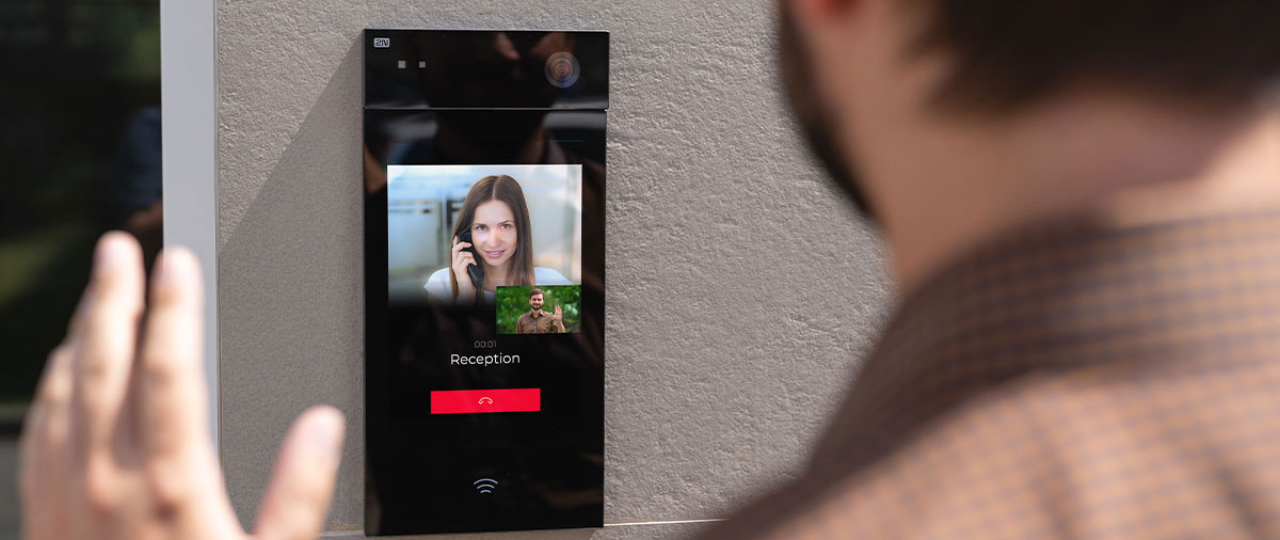
Visual verification is the baseline improvement over legacy audio. The 2N IP Verso 2.0 integrates a Full HD wide-angle camera with WDR technology powered by an Axis ARTPEC-7 processor. Staff see the visitor clearly before making any access decision. That single change — seeing rather than hearing — fundamentally shifts how access decisions are made and how often unauthorized access attempts succeed.
Remote management via mobile app means that authorized personnel manage building entry from anywhere. A property manager at home can verify a contractor's identity and issue a time-limited credential. A facilities director can monitor entry across multiple buildings from a single interface. After-hours access no longer requires physical presence or security compromise.
Documented entry logs capture every interaction automatically. Timestamp, visitor image or video, staff member who responded, access granted or denied, door event correlation. For incidents that require investigation, this record collapses hours of footage review into a direct retrieval. For liability purposes, it provides the documentation that legacy systems cannot produce.
Integration with Axis systems is particularly relevant for buildings already using Axis cameras or Axis Camera Station VMS. Because 2N is part of Axis Communications, the integration is native: automatic device discovery, unified management interface, and shared event correlation without third-party middleware. A visitor call at the intercom automatically associates with the corresponding camera view. An access grant event links to the surveillance clip. The two systems share a data layer rather than operating in parallel. For more on what this unified architecture produces operationally, access control and video integration for NYC buildings covers the combined system directly.
Credential flexibility through the 2N IP Verso 2.0 includes QR code reading, RFID, PIN codes, facial recognition, and mobile credentials. Contractors receive auto-expiring digital keys. Delivery personnel use one-time codes for package room access. Regular tenants use mobile credentials on their phones. The system supports the actual range of access scenarios a commercial building encounters rather than assuming all entry is managed through a single method.
Commercial-grade construction differentiates 2N from consumer alternatives in ways that matter for NYC's environment. IK10 vandal-resistant rating. Anodized aluminum chassis that functions as both impact protection and heatsink for the processor. Professional audio engineered for high-noise street environments. Full building code compliance including fire system integration.
Modular design supporting configurations scaled to the specific building. These specifications reflect engineering for commercial outdoor installation over a 10 to 15 year service life, not for a protected residential mounting. For context on the specific installation and configuration requirements that determine whether a 2N system performs as specified, why your 2N intercom deserves more than a basic installer covers what the engineering behind the hardware requires.
When to Seriously Evaluate an Upgrade
Several specific conditions indicate that a legacy intercom is actively working against a building's security and operational goals rather than simply being outdated. If the building has undergone lobby or common area renovation but the intercom was left as-is, the security infrastructure does not match the physical presentation
If front desk staff are spending a significant portion of their day managing intercom calls for routine deliveries and visitor inquiries, the system is consuming operational capacity that should not require human intervention at that volume. If the building has experienced incidents that could not be investigated because no entry documentation existed, the gap has already materialized into liability exposure.
And if the building is part of a multi-property portfolio that needs unified management, legacy analog systems by definition cannot support that operational model. The intercom repair versus replacement guide covers the decision framework in detail. For buildings in any of the above situations, the question is usually not whether to upgrade but when and how.
Getting From Legacy to Modern Without Disrupting Operations
The transition concern most property managers raise is operational disruption during installation. For occupied commercial buildings, this is a legitimate planning consideration, not a reason to defer.
Connextivity designs phased upgrades that assess existing infrastructure first, engineer the new system against that assessment, stage installation during off-hours or low-traffic periods, and commission and test each entry point before moving to the next. Actual downtime for any individual entry point in most NYC commercial buildings is measured in hours. The full project timeline for a mid-size commercial building runs days, not weeks, when the installation is properly planned rather than improvised. Staff training and handoff documentation are project deliverables, not afterthoughts.
For buildings with landmark preservation requirements affecting exterior hardware, LPC review timelines need to be built into the project schedule. That planning consideration belongs at the assessment phase, before any equipment is specified.
FAQs
What is the difference between a 2N intercom and a consumer video doorbell like Ring or Nest?
The difference is architectural. Consumer video doorbells are designed for single-family residential use: one entry point, one household, cloud-dependent operation, consumer-grade outdoor construction. 2N IP intercoms are engineered for multi-tenant commercial environments: multi-unit directories with hundreds of entries, role-based staff permissions, temporary contractor access scheduling, elevator floor integration, fire alarm compliance, vandal-resistant commercial-grade hardware, and professional audio for high-noise street environments. 2N systems also integrate natively with Axis cameras and professional VMS platforms. Consumer doorbells do not support the access management complexity or the integration requirements of a commercial building.
Does a 2N intercom require replacing all existing wiring? Not necessarily. Many 2N IP systems can utilize existing Cat5 or Cat6 network cabling already present in the building. Where existing structured cabling is adequate, the main infrastructure addition is network connectivity to the entry point and, where it does not already exist, PoE power. For buildings with only analog wiring, new cable runs are typically required for IP devices. A site assessment before specification determines what existing infrastructure supports and what new runs are needed, which directly affects project scope and cost.
How does 2N integrate with existing Axis cameras in a building?
Because 2N is part of Axis Communications, integration with Axis cameras and Axis Camera Station VMS is native. The intercom and cameras share an ONVIF and Axis-native communication layer, enabling automatic device discovery, unified event management, and direct correlation between intercom call events and camera footage in a single management interface. When a visitor calls an apartment, the associated camera view automatically appears in the management system. Entry events and camera clips are linked without manual correlation. For buildings with existing Axis camera infrastructure, this integration is the primary operational advantage of 2N over alternative intercom platforms.
What fire code requirements apply to 2N intercom installations in NYC commercial buildings?
Any 2N installation involving electrically locked entry doors must include hard-wired fire alarm integration that releases the lock immediately when the fire alarm activates. This integration must be hard-wired to the fire alarm panel, not software-dependent, and must be tested before installation is considered complete. NYC DOB permits are required for installations involving electrical work. Fire alarm integration work requires a licensed fire alarm installer holding a Certificate of Fitness S-12 from FDNY. The full regulatory framework governing intercom installations in NYC commercial buildings is covered in the NYC intercom laws and building requirements guide.
How long does a 2N intercom upgrade typically take for a mid-size NYC commercial building?
A properly planned upgrade for a mid-size commercial building with two to four entry points typically completes in two to five days of installation work, with most of that work scheduled during off-hours to minimize tenant disruption. The full project timeline from initial assessment to commissioning and staff training typically runs three to six weeks, with the majority of that time in the assessment, design, and permitting phases rather than in active installation. Buildings with landmark preservation requirements that require LPC approval should plan for an additional 30 to 90 days for the review process before installation begins.
Conclusion
The distinction between a legacy intercom that technically works and a video entry system that actually supports a building's security strategy is not primarily about technology generation. It is about what the system can document, verify, integrate, and manage remotely versus what requires human presence, manual follow-up, and retrospective reconstruction when something goes wrong.
For NYC commercial and mixed-use buildings, the operational and liability gaps that legacy systems create are not theoretical. They appear in incident investigations that cannot be completed because no entry record exists, in front desk operational loads that should not require constant human attention, in after-hours access workflows that force a choice between friction and security, and in multi-building management models that legacy analog hardware simply cannot support.
A security assessment of the existing intercom infrastructure is the right starting point for any building evaluating whether its current system is serving its actual security requirements. The findings determine whether upgrade, replacement, or integration is the appropriate path. What the assessment almost always confirms is that the gap between what the legacy system provides and what the building actually needs is larger than it appeared before anyone looked closely.
Managing an NYC commercial or mixed-use building on a legacy analog intercom and ready to understand what the gap actually costs you?
Connextivity designs and installs 2N IP video intercom systems for commercial properties, mixed-use developments, and luxury residential buildings across New York City. As a certified Axis Communications partner, we handle the full scope from assessment and design through installation, fire alarm integration coordination, commissioning, and staff training. Contact us to schedule an intercom assessment.
Related Articles