
How Connextivity Integrates Milestone VMS for NYC Commercial Buildings
Key Takeaways
A video management system is the operational backbone of any multi-camera surveillance environment. Without one, even well-positioned cameras become difficult to use effectively when footage needs to be retrieved and reviewed under time pressure.
Milestone Systems is an open platform VMS that supports cameras from Axis, Avigilon, Bosch, and hundreds of other manufacturers, making it a practical choice for buildings that need to unify cameras from multiple vendors or generations under a single monitoring interface.
Professional VMS integration is a design and engineering task, not a software installation. Storage capacity, network bandwidth, camera placement, server architecture, and monitoring workflows all need to be designed for the building's specific operational profile before deployment.
Integration with access control and intercom systems transforms Milestone from a passive recording system into an active investigation tool. Door events, intercom calls, and alarm triggers can automatically surface associated camera footage, eliminating manual cross-referencing.
Milestone scales from single buildings to multi-property portfolios. Organizations managing multiple NYC locations can centralize surveillance monitoring across all sites from a single platform rather than maintaining separate systems at each property.
A modern commercial building in Manhattan may operate well over a hundred cameras covering lobbies, elevators, loading docks, hallways, parking areas, and perimeter zones. Each camera records continuously. The footage accumulates constantly.
Without a video management system organizing that data, finding the relevant clip after an incident means manually searching through dozens of simultaneous feeds without timestamps, search tools, or event correlation. Security teams discover this problem the first time they genuinely need to use their footage under time pressure, not before.
This is what Milestone Systems VMS was designed to solve. Connextivity integrates Milestone into commercial security environments across New York City, designing the full system architecture — camera placement, server infrastructure, storage capacity, network bandwidth, and monitoring workflows — so the platform performs as intended rather than simply running in the background while footage goes unretrieved.
What Milestone VMS Actually Does
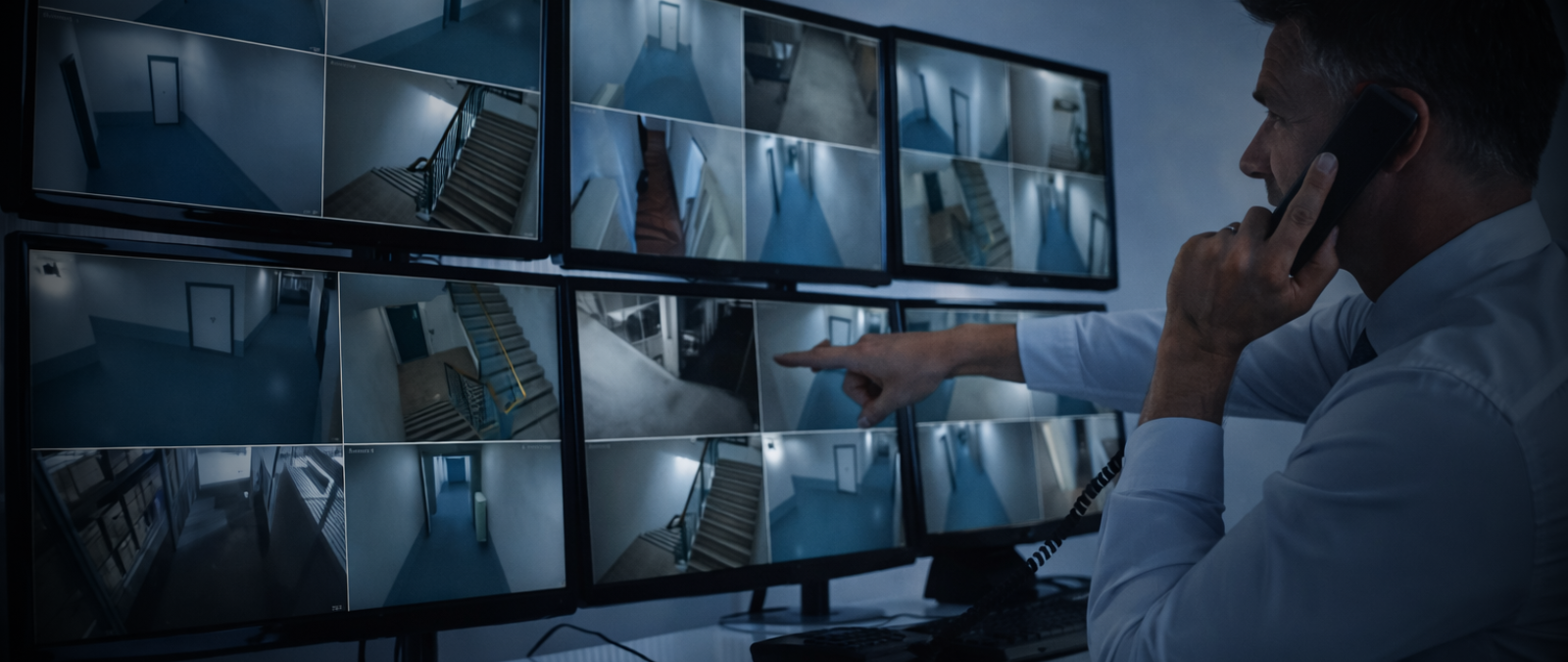
Milestone is a video management platform that aggregates all camera streams in a building into a unified interface where security teams can monitor live video, search and retrieve recorded footage, manage camera systems, and link surveillance events to triggers from access control, alarm, and intercom systems. The platform is open-architecture, meaning it supports cameras from hundreds of manufacturers rather than requiring proprietary hardware.
For buildings that have accumulated cameras from multiple vendors over time, Milestone provides a single monitoring environment that brings all of them together. For new installations, it allows the best-fit camera hardware from partners including Axis Communications, Avigilon, and Bosch Radionix to be specified independently of the management layer. The operational value of that centralization becomes most apparent during investigation.
Without a VMS, reviewing footage from a building with fifty cameras after an incident means checking each camera's individual interface and cross-referencing timestamps manually. With Milestone, footage is searchable by time, location, event type, and motion parameters. An investigation that previously took hours takes minutes.
Why Professional VMS Integration Is an Engineering Task
Deploying Milestone is not a software installation exercise. It is a system architecture design task that determines whether the platform performs correctly under the operational conditions of the specific building it serves. Storage capacity needs to be calculated against the resolution, frame rate, and retention period of the actual cameras in the deployment.
A building with sixty 4K cameras recording continuously at full frame rate requires a fundamentally different storage architecture than one with sixty 1080p motion-triggered cameras. Underpowered storage produces footage gaps or forced retention periods shorter than the building's operational or legal requirements. Network bandwidth needs to be designed to handle the actual video stream load from the full camera count under peak conditions.
Buildings where surveillance traffic was never accounted for in the network design experience quality degradation precisely when load is highest, which typically coincides with the moments when footage quality matters most. Server architecture needs to match the scale of the deployment and provide redundancy appropriate for the building's risk profile.
A single-server configuration that covers a small installation is not appropriate for a building where surveillance continuity is operationally critical. Camera placement, which Connextivity evaluates during the security assessment that precedes any VMS deployment, determines whether the footage Milestone manages is actually useful.
A well-configured VMS organizing footage from cameras positioned incorrectly still cannot produce identification-quality images from the wrong angles. The engineering sequence matters: assessment, then camera design, then VMS architecture, then installation.
Integration With Access Control, Intercoms, and Alarms
Milestone's integration capabilities are where the platform transitions from passive recording to active operational tool. When access control events are integrated with Milestone, a door opening after hours automatically surfaces the associated camera footage. Security staff can immediately see who used the door and in what direction, without manually identifying which camera covers that door, locating the relevant timestamp, and pulling the clip from a separate interface. The event and the footage are the same record.
When 2N video intercom systems are integrated, every visitor call at a building entrance generates a documented event with associated video that can be retrieved and reviewed within Milestone alongside the corresponding access event. The visitor who was buzzed in at 2:30 PM, the door that was released, and the footage of who walked in are all linked. When alarm systems are integrated, triggered sensors automatically pull associated camera footage, allowing monitoring staff to visually verify what caused the alert before committing to a dispatch response. The false alarm determination and the genuine threat response are both faster and more accurate when video context is immediate rather than retrieved after the fact.
Alarm.com can work alongside Milestone in commercial deployments, providing the remote management and alert notification layer while Milestone handles the enterprise-scale video management and recording architecture. The two platforms serve complementary functions rather than competing ones. This integration architecture is what the security by design approach produces, and it is what distinguishes a surveillance environment that actively supports security operations from one that simply records.
NYC-Specific Considerations for VMS Deployment
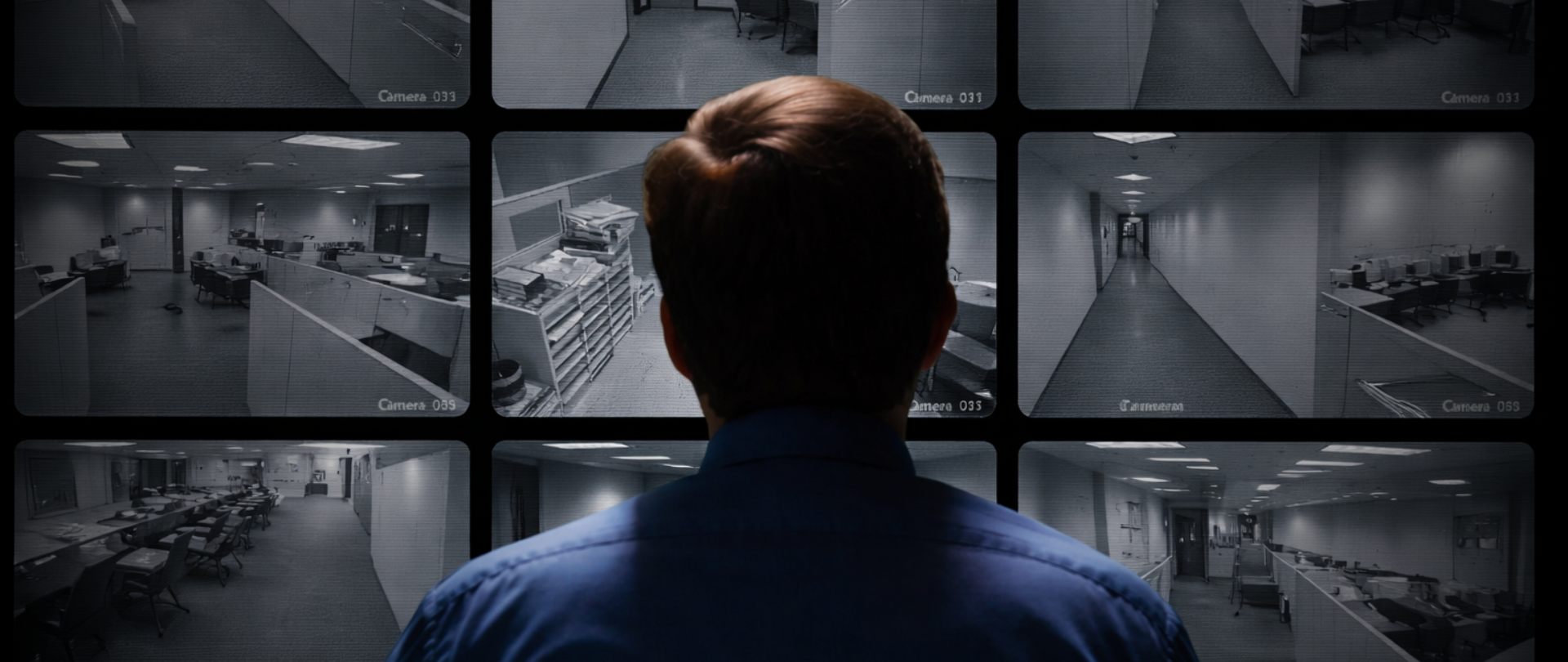
NYC commercial buildings present VMS deployment conditions that require specific planning rather than generic configuration. Building density means that camera counts in mid-size Manhattan commercial buildings regularly exceed what less dense markets would associate with large enterprise deployments.
A 20-story multi-tenant office building with full coverage of all common areas, elevator banks, stairwells, loading docks, and perimeter zones may operate 80 to 120 cameras. Storage, bandwidth, and server architecture all scale accordingly. Multi-tenant occupancy creates surveillance policy complexity. Different tenant zones may have different retention requirements, different access permissions for footage review, and different monitoring workflows.
Milestone's user permission architecture supports this complexity when it is configured to reflect the building's actual tenancy structure rather than defaulting to a single organization's monitoring model. Landmark and pre-war building infrastructure creates physical installation constraints that affect where servers can be located, how network cabling is routed, and what power infrastructure is available for server rooms.
These constraints need to be assessed before system architecture is finalized. For commercial and business properties, hospitality facilities, and data centers and technology operations with specific footage retention and access logging requirements driven by compliance obligations, Milestone's retention management and audit logging capabilities need to be configured against those specific requirements rather than default settings.
Scalability for Multi-Property NYC Portfolios
One of Milestone's significant advantages for NYC commercial real estate operators is its scalability across multiple properties. Organizations managing several buildings across Manhattan or the outer boroughs can centralize surveillance monitoring under a single Milestone environment rather than maintaining separate systems at each location. From a single monitoring interface, security operations staff can view live feeds from any building in the portfolio, retrieve footage from any location, and manage camera systems across all sites.
Events at any property generate alerts in the same dashboard regardless of which building they occur in. This centralized model reduces operational overhead compared to managing separate VMS instances at each property while maintaining the site-specific configuration that different buildings require. It also supports the kind of pattern recognition across properties that is only possible when data from multiple locations is visible in a single analytical environment.
For property management companies and multi-building owners evaluating whether to standardize on a VMS platform across their portfolio, Milestone's combination of open-architecture camera support, scalable licensing, and multi-site management makes it a practical choice for the range of camera hardware and building types that typically exists across a real-world portfolio.
FAQs
What does a Milestone VMS integrator actually do that's different from just installing the software?
A Milestone VMS integrator designs the full surveillance architecture before any installation begins: storage capacity calculated against the actual camera count, resolution, frame rate, and retention requirements; network bandwidth designed to handle peak video stream load; server architecture matched to the scale and redundancy requirements of the deployment; camera placement evaluated against the building's specific surveillance objectives; and integration design connecting Milestone to access control, intercom, and alarm systems. The software installation is the final step in that process. An integrator who starts with software installation and works backward is doing configuration, not engineering.
Can Milestone work with cameras already installed in a building?
In most cases yes. Milestone is an open platform that supports cameras from hundreds of manufacturers through ONVIF compatibility and direct manufacturer integrations. Whether a specific camera model in a specific configuration is supported can be confirmed during the assessment phase. For buildings with cameras from multiple vendors accumulated over time, Milestone provides a practical path to unified management without requiring hardware replacement.
How much storage does a commercial building's Milestone VMS deployment require?
Storage requirements depend on camera count, resolution, frame rate, recording mode (continuous versus motion-triggered), and retention period. A rough estimate for a building with 60 cameras at 1080p recording continuously at 15 frames per second with 30-day retention runs to approximately 25 to 35 terabytes of usable storage before redundancy. 4K cameras at the same parameters require roughly four times that. Compression technologies including Axis Zipstream can reduce these requirements significantly while maintaining evidence-quality footage. Storage architecture should be calculated against the specific camera specifications before any hardware is procured.
How does Milestone integrate with access control systems?
Milestone integrates with access control platforms through event-driven connections that link door events to camera footage. When a controlled door opens or an access attempt fails, the associated camera clip is automatically retrieved and linked to the access event record in Milestone. This integration can be configured to trigger recordings, generate alerts, and create timestamped investigation records that combine the access log entry and the corresponding video in a single retrievable record. The specific integration mechanism depends on the access control platform and requires configuration by a qualified integrator familiar with both systems.
What Milestone edition is appropriate for a mid-size NYC commercial building?
Milestone offers several product tiers including Milestone Husky and Milestone XProtect in multiple editions scaled by camera count and feature requirements. For mid-size NYC commercial buildings with 50 to 150 cameras and integration requirements for access control and alarms, XProtect Professional or XProtect Expert is typically the appropriate starting point. The right selection depends on the specific camera count, integration requirements, user count, and scalability expectations for the deployment. A Milestone certified integrator confirms the appropriate edition during the assessment and design phase rather than defaulting to a standard recommendation.
Conclusion
Surveillance cameras generate footage. A video management system makes that footage operationally useful. The distinction matters most when something happens that requires the footage to answer a specific question under time pressure — and that is exactly when a poorly architected VMS reveals whether it was designed or simply deployed.
For NYC commercial buildings generating continuous footage across large camera counts, Milestone provides the centralized management, event-driven search, and integration capability that transforms surveillance from a passive recording function into an active security tool. The platform's value is fully realized when the deployment was engineered for the specific building, with storage, bandwidth, and integration designed before installation rather than discovered as constraints after it.
Connextivity integrates Milestone VMS for commercial properties across New York City, designing the full system architecture and managing the integration with Axis, Avigilon, Bosch, 2N, and Alarm.com hardware so the complete surveillance environment performs as a coordinated system.
Managing a NYC commercial building where surveillance footage is difficult to retrieve, cameras from multiple vendors run on separate systems, or your current VMS is undersized for the camera count you are actually operating?
Connextivity designs and deploys Milestone VMS environments for commercial properties across New York City, including architecture design, storage planning, network configuration, and full integration with access control, intercom, and alarm systems. Contact us to schedule a VMS consultation.
Related Articles
Professional Security Camera Installation NYC: What Building Owners Need to Know
Access Control and Video Integration: Why NYC Buildings Need Both Working Together
5 Ways NYC Property Owners Can Manage Building Security Remotely With Alarm.com
Why Security by Design Protects NYC Buildings Better Than Checkbox Security
What NYC Businesses Need to Know Before Choosing an Axis Communications Partner