
Why Every NYC Property Owner Needs a Security Risk Assessment
Key Takeaways
A security risk assessment identifies vulnerabilities before they turn into costly incidents or liability exposure.
NYC properties face elevated risk due to high tenant turnover, delivery volume, and dense traffic patterns.
Upgrading cameras or access control without an assessment often leaves core weaknesses unresolved.
Proper documentation from a structured assessment strengthens legal defensibility and insurance positioning.
Effective building security begins with evaluating risk, not purchasing equipment.
A security risk assessment identifies hidden vulnerabilities in your NYC building before they turn into liability, tenant dissatisfaction, or costly incidents. It evaluates your entry points, surveillance coverage, access control policies, operational procedures, and documentation practices so you understand where real exposure exists. Without a structured assessment, most property owners invest in security reactively instead of strategically.

Most Security Problems Start Quietly
Security failures in New York City rarely begin with something dramatic. They begin with small assumptions that feel harmless at the time.
The cameras are recording, so coverage must be sufficient. The doors lock automatically, so entry must be controlled. The intercom works, so visitor management must be handled. Over time, these assumptions become routine, and routine becomes blind confidence.
Then something happens.
An unauthorized individual gains access during peak delivery hours. A former contractor’s credential still functions months after their contract ended. A side entrance that was temporarily unlocked for renovations never returned to controlled access. None of these issues feel urgent until they are tied to an incident.
A security risk assessment exists to catch these quiet vulnerabilities before they escalate into something visible and expensive. It shifts security from assumption to verification.
What a Security Risk Assessment Actually Involves
When property owners hear the phrase “security risk assessment,” many imagine a simple walkthrough with a clipboard. In reality, a proper assessment is structured, methodical, and strategic.
It begins with understanding how the building actually operates, not just how it was designed to operate. How do tenants enter during business hours, and what changes after five o’clock. How are deliveries processed during peak periods. How are credentials issued, updated, and revoked. Where do contractors access the property, and who supervises that process.
From there, physical security systems are evaluated in context. Surveillance cameras are not only checked for resolution but also for positioning, coverage overlap, and blind spots that may have formed after layout changes or tenant buildouts. Access control systems are reviewed not only for functionality but for credential lifecycle management and permission structure. Intercom systems are examined for verification capability and documentation.
For properties that already use modern platforms from 2N integrated within the Axis Communications ecosystem, the assessment looks deeper. It evaluates whether those integrations are fully optimized or simply installed.
There is a meaningful difference between operational technology and effective security strategy.
Why NYC Properties Carry Unique Exposure
Owning property in New York City means managing complexity at a scale most markets never encounter. High tenant turnover creates constant changes in access privileges. Mixed-use buildings blend residential, retail, and commercial traffic patterns into a single entry ecosystem. Delivery services operate continuously, and after-hours vendor access is common.
This density increases friction points. It also increases risk.
In a lower traffic suburban building, a minor procedural weakness might go unnoticed for years. In Manhattan, the same weakness is tested dozens of times a day. If your building processes hundreds of entry interactions daily, small inefficiencies compound quickly.
Even properties that have invested in IP surveillance systems for NYC commercial buildings may still carry exposure if entry policies, credential management, or documentation procedures have not been evaluated holistically. Security must function as a system, not as isolated hardware components.
The Hidden Cost of Skipping Assessment
Many property owners move directly toward upgrades when something feels outdated. They replace cameras, modernize an intercom panel, or expand card access points. These investments feel proactive, but without a structured risk assessment, they are often reactive.
Upgrading equipment without understanding vulnerability patterns can create a false sense of progress. A building may install higher-resolution cameras yet leave service entrances insufficiently monitored. It may modernize entry hardware without correcting lax credential revocation practices. It may add new technology while leaving procedural weaknesses untouched.
A professional security system upgrade evaluation ensures that improvements are prioritized based on risk exposure rather than aesthetics or urgency.
Security should be engineered around threat likelihood and impact, not around product availability.
Documentation and Liability in a High-Exposure Market
One of the most overlooked reasons for conducting a security risk assessment is documentation. In the event of an incident, investigators and insurers do not simply ask whether a camera existed. They examine whether foreseeable risks were addressed appropriately.
If a known blind spot was never corrected or outdated credentials remained active despite turnover, liability can increase. A formal assessment demonstrates due diligence. It shows that vulnerabilities were identified and mitigation strategies were implemented.
In Manhattan commercial environments where litigation exposure can escalate quickly, this documentation becomes more than procedural. It becomes protective.
Entry Security as the First Line of Defense
Entry points represent the most consistent interaction between the public and your property. They are also where most breakdowns occur.
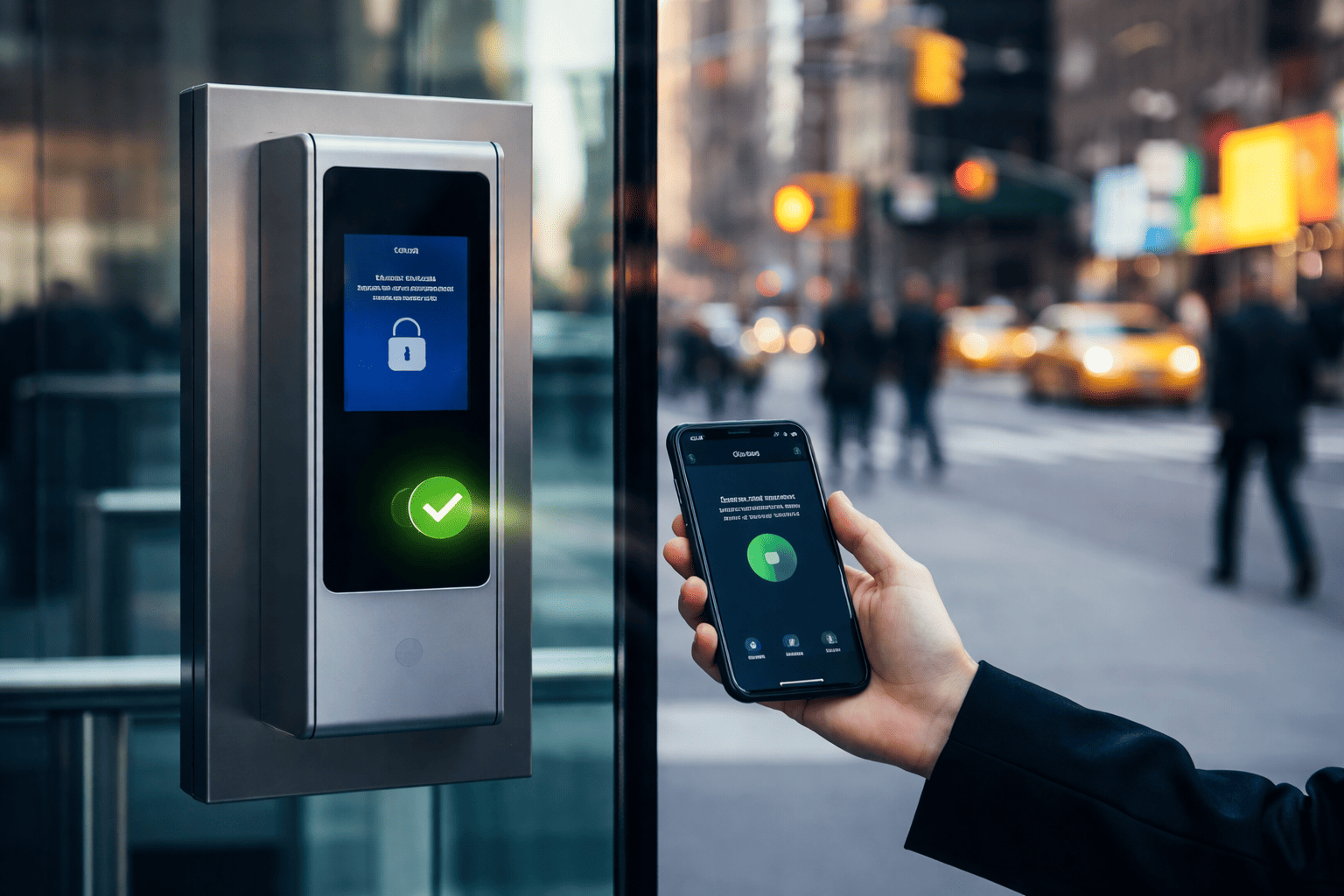
An effective assessment evaluates whether your NYC access control system aligns with real-world operational flow. Are temporary credentials time-limited. Are after-hours entries monitored and documented. Are visitor interactions integrated with surveillance systems such as Axis Camera Station so that access events and video footage correlate automatically.
When entry systems are isolated from surveillance and monitoring platforms, accountability fragments. When integrated properly, entry becomes traceable, reviewable, and defensible.
Security Is an Operational Discipline
The most secure properties in New York do not treat security as a product category. They treat it as an operational discipline that evolves with tenant mix, layout changes, and staffing adjustments.
If your building has recently undergone renovations, expanded occupancy, upgraded infrastructure, or changed management structure, your security environment has changed as well. Risk assessments ensure alignment between operational reality and protective measures.
Without periodic evaluation, gaps emerge gradually. They rarely announce themselves until something forces attention.
FAQs
What does a security risk assessment include for NYC commercial buildings?
A comprehensive assessment reviews entry management, surveillance coverage, access control policies, credential lifecycle management, and operational procedures. It evaluates how systems function together rather than independently.
How often should a property owner conduct a security assessment?
Assessments are recommended after renovations, major tenant turnover, infrastructure upgrades, or management transitions. Periodic reviews every few years help ensure alignment as operational conditions evolve.
Is a risk assessment only necessary after an incident?
No. The most effective assessments occur proactively. Waiting until after an incident increases liability exposure and reactive spending.
Will a risk assessment require replacing all existing systems?
Not necessarily. Many assessments result in targeted adjustments, integration improvements, or procedural changes rather than full hardware replacement.
How long does a professional security assessment take?
The duration depends on building size and complexity, but thorough evaluations typically involve site walkthroughs, system review, and structured reporting rather than a brief inspection.
Schedule a Professional Security Risk Assessment
If you own or manage commercial property in NYC, a structured security risk assessment should be part of your operational planning, not a reaction to an incident.
Connextivity provides comprehensive security risk assessments across Manhattan and New York City. Our evaluations examine surveillance infrastructure, access control systems, entry management, and procedural enforcement to identify vulnerabilities before they become liabilities.
We begin with exposure analysis, not equipment sales.
If you want clarity on whether your current systems and policies align with today’s operational demands, schedule a consultation. A proactive evaluation today costs significantly less than a reactive response tomorrow.