
5 Signs Your Building’s Intercom Is Failing (and Why Repairable Systems Matter)
Key Takeaways
Urban intercom systems take daily punishment from heavy use, weather exposure, and occasional vandalism. How the hardware handles component failure determines whether a single damaged part becomes a repair or a full replacement.
Many consumer-grade and mid-tier "smart intercom" products are sealed single-unit devices. When the screen cracks, the camera fails, or the reader stops responding, the manufacturer's solution is replacing the entire device.
Commercial-grade modular intercom systems from manufacturers like 2N are designed so individual components — the camera module, keypad, card reader, display, and communication module — can each be replaced independently. One failed part does not require replacing the whole system.
IK impact ratings measure enclosure resistance to mechanical damage. Commercial intercoms specified for NYC's urban environment should carry IK10, the highest rating, for any component exposed to the entry area.
Hardware designed for serviceability has significantly lower long-term maintenance costs than hardware that treats component failure as a replacement trigger.
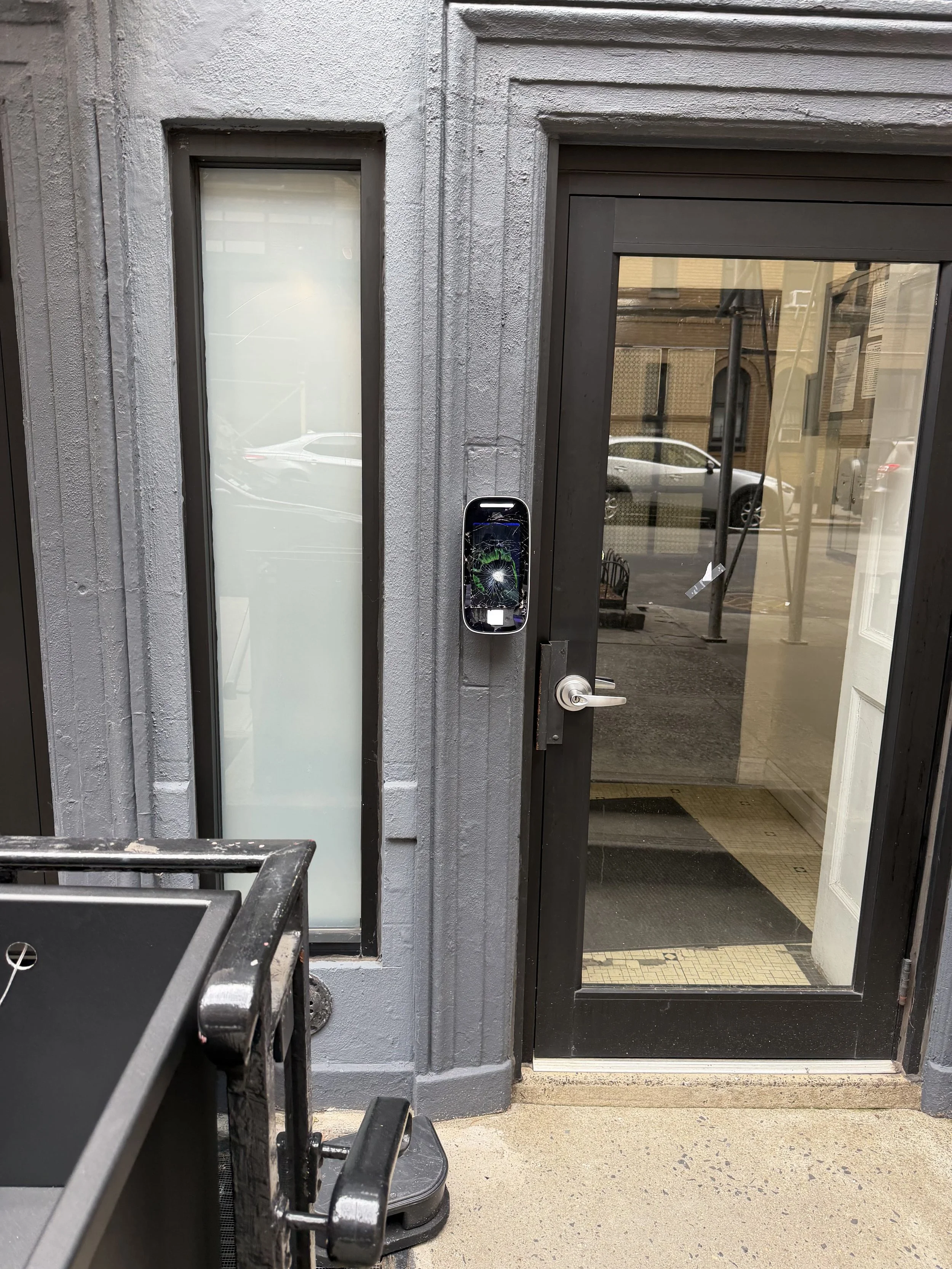
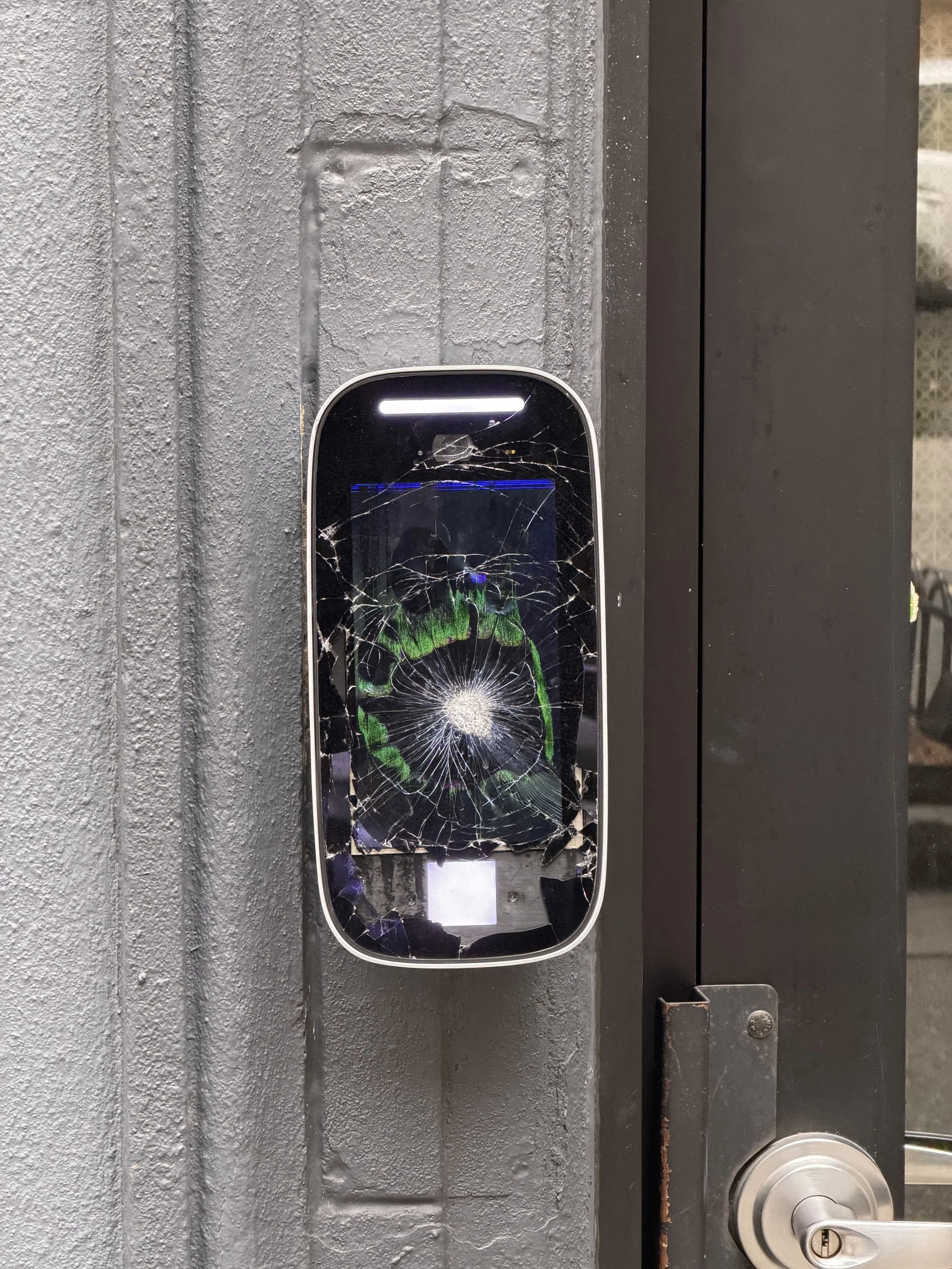
A building manager in New York City contacts their intercom vendor because the touchscreen at the main entrance has been shattered. The device still works internally — the door release functions, the call routing is intact, the network connection is active. Only the display is damaged.
The vendor's response: the entire unit needs to be replaced.
That outcome is not unusual. A growing share of the intercom market, particularly consumer-adjacent products positioned as "smart building" technology, is built on sealed monolithic hardware. Every component — camera, display, reader, speaker, processor — is integrated into a single enclosure that ships as a unit and, when any component fails, is replaced as a unit.
For a New York City commercial building where entry hardware is exposed to heavy daily traffic, weather extremes, and the occasional deliberate impact, that design choice has a direct financial consequence. It turns what should be a repair into a replacement, repeatedly, over the life of the building.

The Five Signs an Intercom System Is Failing in Ways That Reveal Hardware Design Problems
Broken or cracked display requiring full device replacement. A shattered touchscreen on a sealed intercom unit is the most common scenario that reveals the monolithic design problem. The camera works. The door release works. The network connection is intact. But because the display is integrated into a single sealed housing, the entire device is the replacement unit. In a building that sees significant foot traffic and occasional vandalism, this scenario recurs.
Camera module failure without replacement path. The HD camera that provides visual verification is typically the highest-value component in a video intercom. When a camera module fails in a sealed unit, the building loses visual verification capability until a full replacement arrives, is installed, and is recommissioned. In a modular system, a failed camera module is a component swap.
Card reader or keypad degradation. Physical card readers and keypads experience mechanical wear from repeated use. In commercial buildings where dozens or hundreds of credential presentations happen daily, reader degradation is predictable maintenance rather than unexpected failure. A modular system treats this as a replaceable component. A sealed system treats it as the end of the device's service life.
Intermittent connectivity failures. Network and communication modules can develop faults from moisture ingress, temperature cycling, or electrical events. In a modular system, the communication module is an identifiable, replaceable component. In a sealed system, an intermittent connectivity failure becomes a diagnostic challenge that typically ends in full replacement.
End-of-life component in an otherwise functional system. In a building that invested in a quality intercom installation several years ago, individual components reaching the end of their service life before the rest of the system is the expected pattern. Modular design accommodates this. A single aging component gets replaced and the system continues. Sealed design forces the entire system to age at the pace of its weakest component.
Why Hardware Design Determines Serviceability
The difference between a modular and a monolithic intercom is an architectural decision made during product engineering, not an installation decision. It is visible before purchase if you know what to look for.
2N IP intercoms, which are part of Axis Communications, are designed on a modular architecture. The 2N IP Verso 2.0, for example, separates the camera module, keypad and reader modules, display, and main unit into distinct components with defined interfaces. Up to 20 modules can be combined in a single installation. When a module fails, it is identified and replaced at the component level. The rest of the system continues operating.
Consumer-grade and many mid-tier "smart building" intercom products are designed as integrated units because that architecture is faster and less expensive to manufacture, simpler to deploy, and produces more predictable replacement revenue for the manufacturer. Those incentives favor the manufacturer, not the building owner.
For a building owner evaluating intercom hardware for a NYC commercial property, the question of serviceability should be part of the specification conversation alongside features and price. The lowest upfront cost on a sealed unit often becomes the highest long-term cost when replacement cycles are accounted for.
IK Ratings and What They Mean for NYC Entry Hardware
The IK impact rating is an international standard that classifies how well a device enclosure resists mechanical impact damage. Ratings run from IK00 (no protection) through IK10 (protection against 20 joules of impact, equivalent to roughly a 5kg mass dropped from 40cm).
For intercom hardware installed at the entry point of a NYC commercial building — at street level, accessible to foot traffic, exposed to the conditions that urban environments consistently produce — IK10 is the minimum appropriate specification for any surface-mounted component. Hardware specified below that level is not designed for the environment it will encounter.
2N IP Verso intercoms carry IK10 vandal resistance with an anodized aluminum chassis that functions as both impact protection and heatsink for the Axis ARTPEC processor inside. The construction reflects engineering for the actual conditions of outdoor commercial installation rather than indoor residential use with weatherproofing added.
IP ratings, which measure protection against dust and moisture, should also be confirmed for any outdoor NYC installation. IP65 or higher is the appropriate specification for fully outdoor entry panels exposed to precipitation. Undershooting either rating produces hardware that may meet a compliance checkbox but fails under operating conditions at a rate that generates predictable maintenance costs.
The Total Cost Calculation Over a Building's Service Life
The financial case for modular commercial-grade hardware becomes clear when the full cost of ownership is calculated rather than just the initial purchase price.
A sealed intercom unit at a lower purchase price that requires full replacement after a vandalism event, a camera failure, or a reader wearing out carries a replacement cost equal to the full unit price plus installation labor, each time. In a NYC commercial building where entry hardware is exposed to the conditions described above, the interval between those replacement events is measurable in months to a few years rather than in decades.
A modular commercial-grade unit at a higher purchase price that handles the same failure scenarios through component replacement carries a much lower aggregate maintenance cost over the same period. The camera module replacement costs a fraction of a full unit. The reader module swap costs a fraction of a full unit. The installation labor for a component swap is a fraction of the labor for a full system recommissioning.
This is the same calculation that drives commercial alarm systems toward hardwired sensors over wireless alternatives: lower upfront convenience is often higher aggregate cost over a realistic operating period. The hardware decision made at installation determines the maintenance cost profile for the life of the system.
What This Means for Buildings Evaluating Intercom Hardware Now
For NYC building owners and property managers evaluating intercom hardware for new installation or replacement of an existing system, serviceability deserves explicit attention in the specification and vendor selection process.
Questions worth asking any vendor: Is this hardware modular? Can individual components be replaced without replacing the full unit? What is the IK impact rating? What is the IP rating for outdoor components? What is the typical component-level repair cost compared to full unit replacement? What is the manufacturer's parts availability commitment over the next ten years?
For buildings whose existing system is already producing the failure patterns described above — full unit replacements after component failures, manufacturer support that defaults to replacement rather than repair — a transition to modular commercial-grade hardware is worth evaluating as part of the next replacement cycle. The intercom repair versus replacement decision framework covers the financial thresholds and system age considerations that govern that decision.
FAQs
What makes an intercom system "modular" and why does it matter for NYC buildings?
A modular intercom system separates its functional components — camera, display, card reader, keypad, speaker, and communication module — into individually replaceable units rather than integrating everything into a single sealed housing. When a component fails in a modular system, that component is replaced. When a component fails in a sealed system, the entire device typically requires replacement. For NYC commercial buildings where entry hardware experiences heavy daily use, weather exposure, and occasional vandalism, modular design directly affects how often a single component failure becomes a full system replacement and the associated cost.
What is an IK10 rating and should every NYC commercial intercom have it?
IK10 is the highest classification in the IK impact rating standard, indicating that the device enclosure can withstand a 20-joule mechanical impact. For intercom hardware installed at the entry points of NYC commercial buildings at street level, IK10 is the minimum appropriate specification for surface-mounted components. Hardware with lower IK ratings is designed for protected indoor environments, not for the conditions that urban street-level installation produces. Specifying hardware without confirming IK ratings is a common oversight that results in predictable damage and replacement costs.
Why do some intercom manufacturers default to full replacement rather than component repair?
Sealed single-unit intercom products are faster and less expensive to manufacture than modular designs. They are also simpler to install. For the manufacturer, a sealed design that requires full unit replacement after any significant component failure generates more predictable replacement revenue. For the building owner, that same design generates higher aggregate maintenance costs over the system's operating life. Modular commercial-grade hardware from manufacturers like 2N reflects a design priority oriented toward the building owner's long-term cost rather than the manufacturer's replacement cycle.
Can a building with an existing non-modular intercom switch to a modular system?
Yes. Transitioning from a sealed intercom system to a modular commercial-grade alternative is a standard replacement project. The scope depends on whether existing wiring infrastructure can be retained or needs to be replaced. For IP-based systems like 2N, existing Cat5 or Cat6 network cabling can typically be reused, which reduces the installation scope. For buildings transitioning from analog systems, new cable runs may be required. A site assessment before specification confirms what existing infrastructure supports.
Is the cost difference between commercial-grade modular hardware and consumer-grade sealed hardware significant?
The upfront purchase price of commercial-grade modular hardware from manufacturers like 2N is higher than consumer-grade alternatives. Over a realistic operating period in a NYC commercial building, the aggregate cost including component replacements and installation labor for those replacements frequently makes the commercial-grade option less expensive in total. The crossover point depends on the specific failure rate of the hardware in the specific environment, which is why NYC commercial buildings — with their heavy use and urban exposure conditions — see this calculation resolve in favor of commercial-grade hardware more consistently than lower-traffic environments.
Conclusion
The question of whether a failed intercom component becomes a repair or a replacement is determined by a hardware design decision made before the intercom was ever specified. Building owners and property managers who do not ask about modular design during the procurement process inherit the consequence of that decision every time a component fails.
For NYC commercial buildings where entry hardware operates under the conditions that urban environments consistently produce — heavy daily use, temperature extremes, moisture, and occasional deliberate impact — the distinction between hardware designed for serviceability and hardware designed for replacement is a financial reality that compounds over the system's operating life.
Specifying commercial-grade modular intercom hardware, confirming IK10 and IP65 ratings for outdoor components, and understanding the manufacturer's parts availability commitment before purchase is how building owners avoid inheriting a replacement cycle that was built into the hardware from the start.
Managing a NYC commercial building where intercom hardware failures keep turning into full replacement projects rather than component repairs?
Connextivity installs 2N modular IP video intercom systems for commercial properties across New York City, engineered for NYC's urban operating conditions with IK10 vandal resistance, modular serviceability, and full integration with Axis camera and access control systems. Every installation starts with an assessment of the existing infrastructure and what it will support. Contact us to schedule an intercom assessment.
Related Articles