
Hardwired Residential Alarm System Modernization
Confidential Residential Client | Whole-Home Alarm, AI Cameras & Professional Monitoring
-
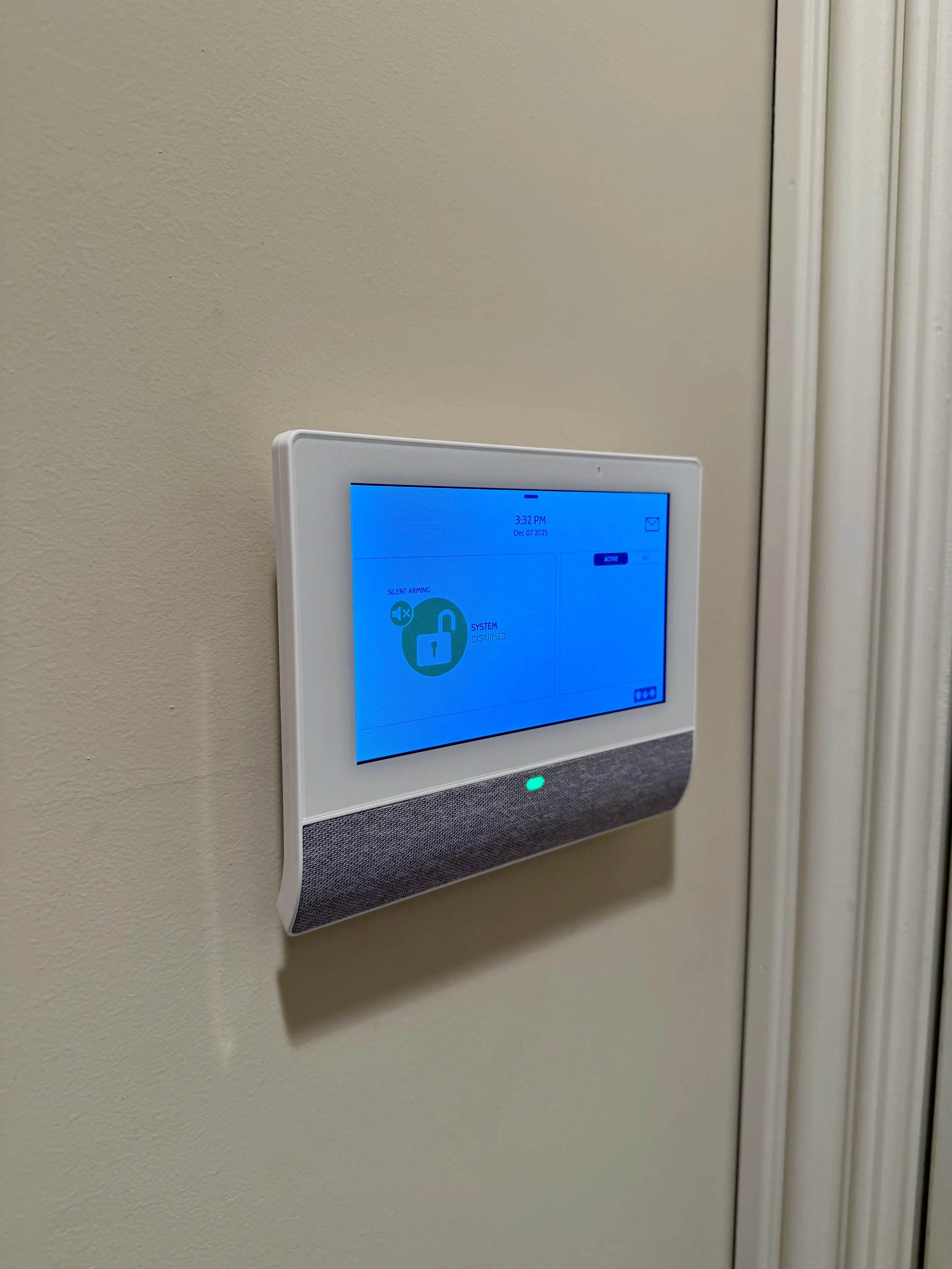
![Touchscreen alarm panel showing system disarmed]()
-
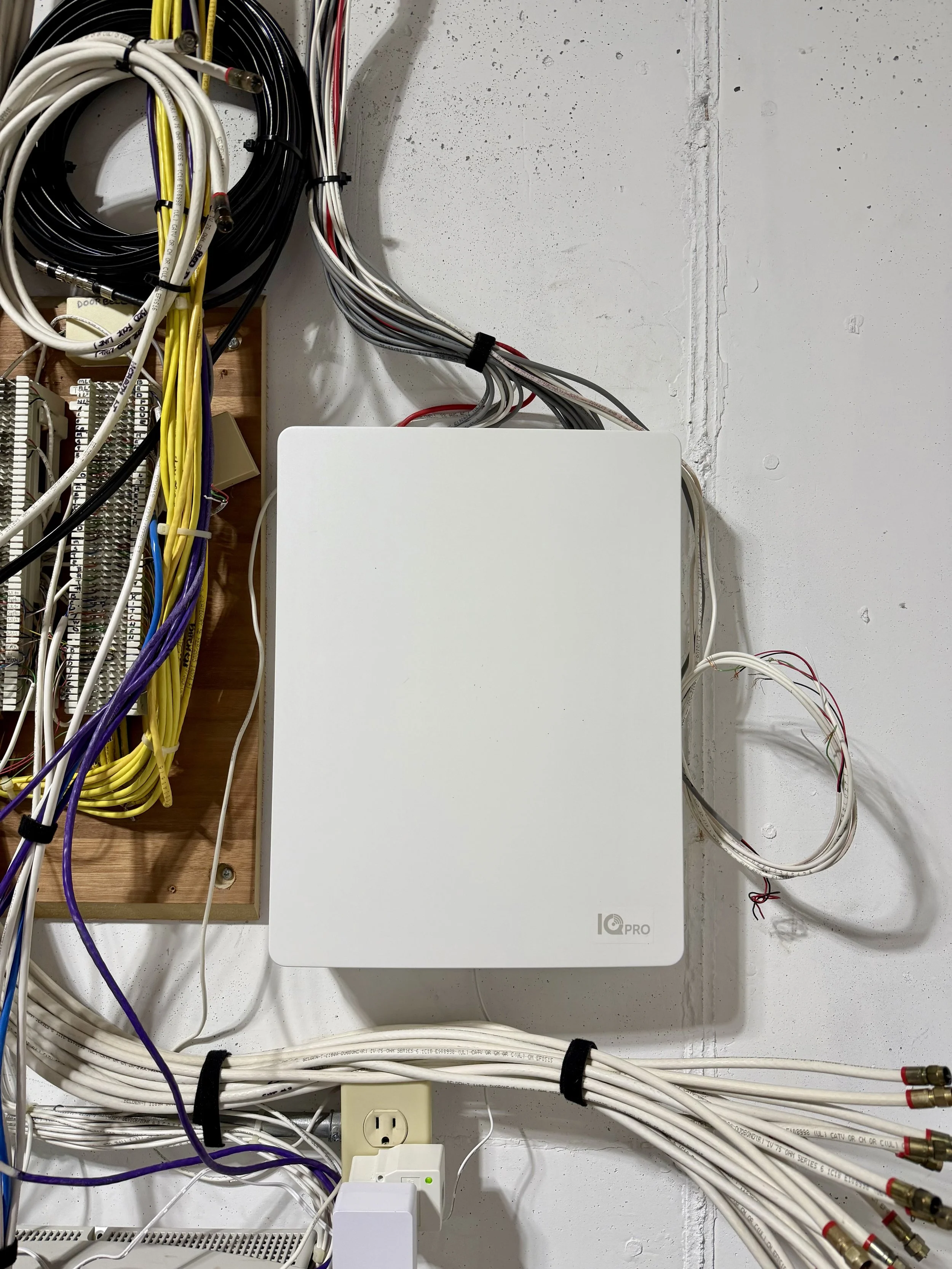
![White, hardwired cellular backup alarm panel installed on wall]()
-
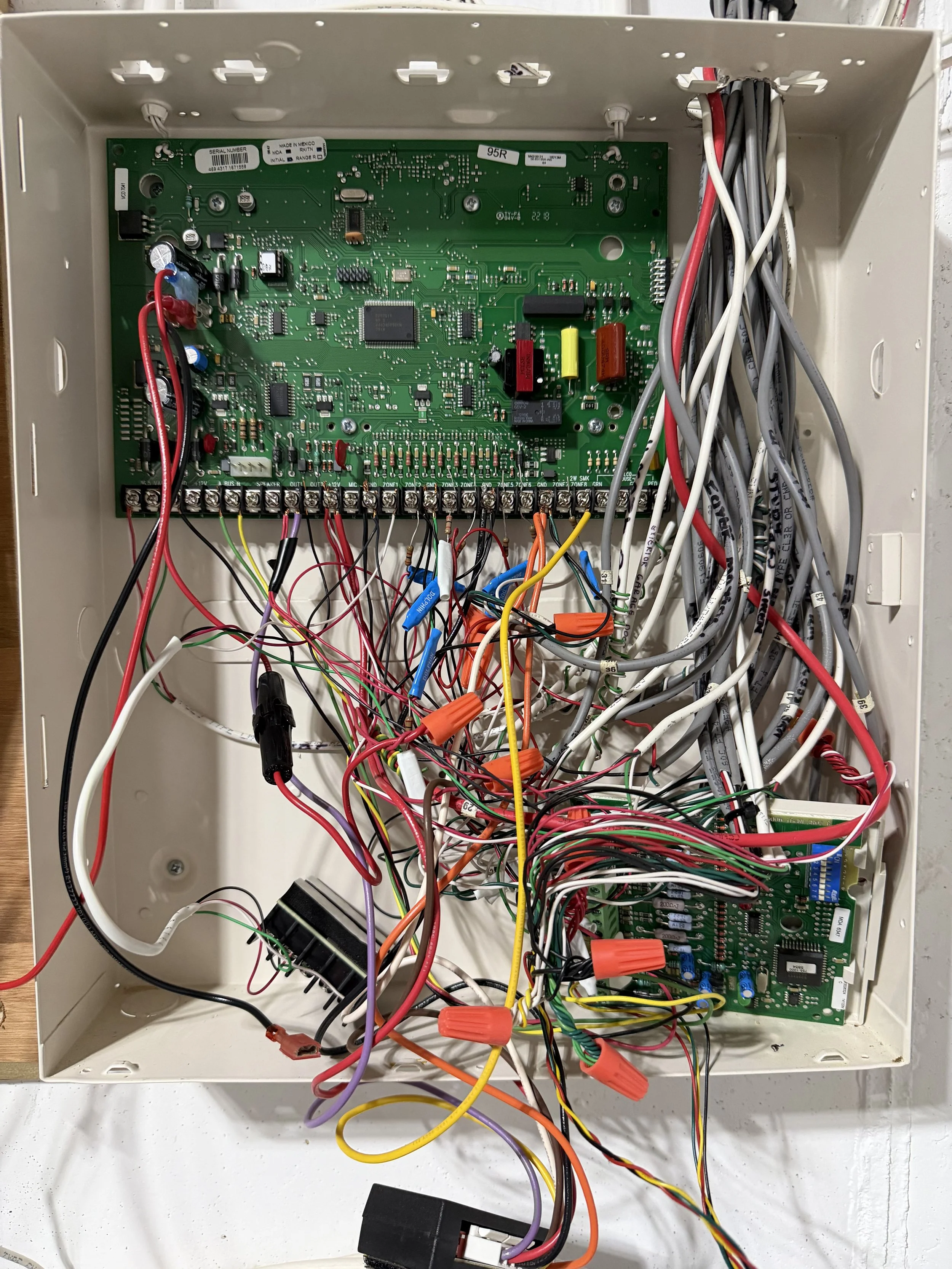
![Before Picture of Messy Alarm Panel with wires running everywhere]()
BEFORE - Messy Existing Panel
Project Overview
A homeowner had spent years dealing with an unreliable alarm system that had eventually become unusable.
The existing system was more than 20 years old and suffered from persistent arming failures, constant beeping, wiring problems, and repeated service issues that previous providers never properly diagnosed. After multiple failed repair attempts and ongoing frustration, the homeowner ultimately unplugged the system entirely and stopped using it.
When the homeowner decided to revisit the project, reliability was the priority. With more than 20 sensors installed throughout the property, many in difficult-to-access locations, the homeowner specifically wanted to avoid a solution dependent on constant battery replacements and unreliable consumer-grade wireless devices.
Connextivity approached the project by diagnosing and correcting the root infrastructure problems rather than replacing the system with the quickest possible solution.
The Challenge
The existing alarm system had deteriorated far beyond simple equipment replacement.
Years of improper installation practices created widespread reliability issues throughout the home. Wiring had been poorly spliced, cable runs were disorganized, and many sensors had not been properly terminated with end-of-line resistors, preventing the system from accurately detecting sensor conditions.
The homeowner experienced:
Frequent arming failures
Persistent fault conditions
Constant keypad beeping
Lack of confidence in the system
Previous unsuccessful repair attempts
Ongoing maintenance frustration
Many alarm companies would have replaced the system entirely with inexpensive wireless devices. However, that approach would have introduced new vulnerabilities, additional maintenance requirements, and ongoing battery replacement issues across more than 20 sensors throughout the home.
The project required a properly engineered solution focused on reliability, infrastructure correction, and long-term usability.


Our Solution
Before recommending any replacement equipment, Connextivity performed a complete assessment of the existing alarm infrastructure, tracing every wire, identifying every sensor, and diagnosing the underlying causes behind years of persistent failures.
Rather than abandoning the existing hardwired infrastructure, we preserved and integrated the original sensor network while correcting the wiring and system design issues causing the failures.
Scope of Work & System Deployment
Full Hardwired Sensor Retention integrating all existing hardwired sensors into the new system while eliminating ongoing battery replacement requirements across 20+ sensors throughout the home
End-of-Line Resistor Corrections properly terminating every sensor to manufacturer specifications to eliminate false faults and persistent arming issues
Wiring Cleanup & Infrastructure Remediation correcting improper splices and disorganized cable runs throughout the property
Encrypted Wireless Sensor Deployment installing secure encrypted wireless devices only where additional coverage was required
Qolsys IQ Pro Alarm System Installation providing a modern professionally engineered alarm platform throughout the home
Multiple Touchscreen Keypad Installations supporting simplified arming/disarming, real-time zone visibility, and voice annunciation features
AI Security Cameras with Video Verification enabling monitoring operators to visually confirm alarm activity prior to escalation
Dual-Path Communication with Cellular Backup maintaining uninterrupted alarm communication through both broadband and cellular pathways
Smoke Detector Integration connecting life-safety devices into the unified alarm environment
Professional 24/7 Monitoring Services backed by a UL-listed, FM-approved, IQ-certified, and TMA Five Diamond Certified monitoring infrastructure
Smart Communication Features supporting automated text alerts and secure family coordination messaging during alarm events
Smart Home & Mobile App Integration enabling remote control of alarm systems, cameras, locks, thermostats, and garage doors

Fixing the Root Cause Instead of Replacing Everything
One of the most important aspects of the project was identifying and correcting the underlying infrastructure issues that previous providers failed to resolve.
Rather than removing functioning hardwired infrastructure and replacing it with lower-grade wireless equipment, we repaired and modernized the existing system properly. By correcting sensor termination, wiring integrity, and system architecture issues, we transformed a completely abandoned alarm system into a modern, reliable security environment designed for long-term daily use.
The project reflects Connextivity’s engineering-first approach to residential security, applying the same reliability standards used across commercial and government installations.
The Results
The homeowner went from completely unplugging the alarm system in frustration to actively using the system every day with confidence.
The upgraded environment now provides:
Reliable daily system operation
Simplified touchscreen control
Real-time voice notifications
Remote management from anywhere
Continuous monitoring with cellular backup
Reduced false alarm risk
Video-verified alarm events
Unified life-safety monitoring
When alarms occur, monitoring operators now respond with both phone calls and automated text notifications, while video verification helps confirm incidents before escalation.
Most importantly, the project was not about selling unnecessary replacement hardware. It was about properly diagnosing the existing issues, correcting them at the infrastructure level, and delivering a professionally engineered security environment designed to last.
Technologies Deployed:
Qolsys IQ Pro | Hardwired Sensor Integration | Encrypted Wireless Sensors | Dual-Path Communication with Cellular Backup | AI Security Cameras with Video Verification | Touchscreen Keypads with Voice Prompts | Smoke Detector Integration | UL-listed, FM-approved, IQ-certified, TMA Five Diamond Certified Professional Monitoring | Smart Home and App Integration

Residential Security Designed for Long-Term Reliability
Reliable residential security systems require more than simple equipment replacement.
This project demonstrates how proper infrastructure assessment, correct installation practices, and thoughtful system engineering can restore confidence in a security environment that had previously become unusable.
We apply the same engineering-focused approach across residential, commercial, and government projects where reliability, usability, and long-term operational performance matter.

Experiencing Alarm System Issues?
If your alarm system frequently throws errors, fails to arm properly, or has become too unreliable to use, Connextivity can help diagnose the underlying problem before recommending a replacement.
Contact our team for a complimentary security system assessment.

The Challenge
The homeowner had lived for years with a security alarm system that simply stopped working. The system was over 20 years old, riddled with wiring errors from the original installer, and had grown too unreliable to depend on. Arming errors and constant beeping became routine. A previous alarm company had attempted multiple repairs and added additional modules, but nothing fixed the underlying problems. Eventually, the homeowner did what anyone in his position would do: he unplugged the whole system and gave up on it entirely.
When he was ready to try again, one requirement was non-negotiable. With over 20 sensors spread throughout the home, many of them in hard-to-reach locations, he was not interested in a system that required constant battery replacements.
Most alarm companies would have solved that by doing what's easiest for them: ripping out everything and replacing it all with inexpensive wireless sensors. It's faster, requires less training, and is simpler to install. The problem is that consumer-grade wireless sensors are easily jammed, often use unencrypted signals, and introduce the exact vulnerabilities a professionally engineered alarm system is supposed to eliminate.
Connextivity approached this differently.
Our Solution
Before any equipment was ordered, our team performed a thorough assessment of the existing system. We traced every wire, identified every sensor, and diagnosed what was actually causing years of persistent failures — something the previous company never did.
What we found was a wiring job that needed to be corrected at its foundation. Cables ran haphazardly through the home with improper splices at multiple points. More critically, many of the sensors had not been correctly terminated with the appropriate end-of-line resistors, a fundamental requirement in hardwired alarm systems. When sensors are improperly terminated, the panel cannot accurately read their state, which causes exactly the kind of arming failures and false fault conditions this homeowner had experienced for years.
Rather than tearing out the existing infrastructure, we preserved and integrated all existing hardwired sensors into the new system. Hardwired sensors require no batteries, are immune to wireless jamming and signal interference, and are consistent with the approach we apply on our commercial and government installations. Where our assessment identified gaps in coverage requiring new sensors, we installed only encrypted wireless devices — never inexpensive, consumer-grade equipment.
Our full scope of work included:
Full hardwired sensor retention — all existing sensors integrated into the new system, eliminating battery replacements across 20+ sensors throughout the home
End-of-line resistor corrections — every sensor properly terminated to manufacturer specifications, resolving the arming errors and false faults the homeowner had experienced for years
Wiring cleanup and remediation — existing messy cable runs and improper splices corrected throughout the home
Encrypted wireless sensors — installed only where new coverage was required, using secure, encrypted signals consistent with our commercial standards
Qolsys IQ Pro panel with multiple touchscreens — modern touchscreen keypads installed throughout the home, providing convenient arming and disarming from multiple locations, real-time readouts of open doors and active motion zones, and voice prompts that announce open doors and active alarms
AI Security Cameras with Video Verification — cameras covering crucial entry points provide general security alerts and, in the event of an alarm, live footage is reviewed by monitoring center operators for human verification before escalation. Video verification can satisfy requirements in jurisdictions that mandate it before dispatching police, and accelerates response times in those that don't
Dual-path communication with cellular backup — the system communicates over both broadband and cellular, so if internet goes down, the alarm still reports to the monitoring station without interruption
Smoke detector integration — existing smoke detectors tied into the new alarm system for unified life-safety monitoring
Award-winning professional 24/7 monitoring — backed by a TMA Five Diamond Certified, UL-listed, FM-approved, and IQ-certified monitoring network. Our monitoring partner has been recognized as Monitoring Station of the Year and operates three fully redundant, staffed monitoring centers that are hot-redundant, load-sharing, and built for disaster recovery. If one center is affected, the others handle every alarm without interruption
Smart Communication Features — when an alarm sounds, our monitoring service automatically sends a text alert, useful when a call cannot be answered. Family members can also coordinate through a secure messaging portal to discuss quietly whether an alarm is a false trigger or needs to be escalated, without phone calls or confusion
App Control and Smart Home Integration — full remote arming, disarming, and system management from a smartphone, including control of security cameras, locks, thermostats, and garage doors.
The Results
The homeowner went from a system he had unplugged in frustration to one he actively uses every day. The Qolsys touchscreens are intuitive, the voice prompts make it immediately clear what's happening in the home, and the app gives him full control from anywhere.
When the alarm triggers, a real person calls, and if he can't answer, a text follows automatically.
With dual-path communication and cellular backup, the system stays connected to the monitoring station even if internet service is disrupted, something his old system never had.
With video verification, when an alarm triggers, operators visually confirm what's happening before escalating, reducing false alarm dispatches and, where required by local ordinance, satisfying police response requirements.
Most importantly, the fix wasn't about selling new hardware. It was about identifying what was actually wrong, correcting it properly, and building a system engineered to last without the ongoing maintenance headaches that drove him away from his previous one.
Dealing with an alarm system that throws errors, won't arm, or has just been unplugged? Contact our team for a complimentary assessment. We'll find out what's actually wrong before recommending anything.