
Key Cards vs. Mobile Credentials: Which Is More Secure for Commercial Buildings?
Key Takeaways
Many commercial buildings in NYC still run legacy 125kHz proximity cards, which can be copied in seconds using inexpensive, widely available tools.
Mobile credentials are more secure than legacy cards in most commercial settings, but they require compatible readers and often a new access control system.
The most common security gaps are not about the credential format. They are improperly installed systems, no access audits, and fobs still active for people who left years ago.
Hybrid deployments supporting both physical cards and mobile credentials are the most practical approach for most commercial buildings.
Upgrading the credential format without improving how the access control program is managed does not close the real gaps.
Mobile credentials are more secure than legacy key cards for most commercial buildings, and that is not a contested point at this stage. The more important question is whether the access control program behind the credential is actually being managed.
The format matters, but how the system is administered has more bearing on real-world security. A building that moves to mobile credentials while former tenants and past employees remain active in the system, with no process for removing them, has not solved its underlying access control problem.
Why Legacy Key Cards Still Create Real Risk
The most common card type in older NYC commercial buildings is the 125kHz proximity card. These have been standard for decades and many properties are still running them. The core problem is that 125kHz prox cards transmit a fixed, unencrypted ID to any compatible reader within range. There is no authentication, no verification that the card belongs to the person presenting it. That ID can be captured with a device held near the card and written to a blank credential in seconds.
We worked with a commercial building where two separate problems came to light during a review. The first was forced entry with no alarm response. The access control system had been improperly installed, with door contacts not correctly set up. The system had no way to detect those doors being opened, so no alarm fired.
The second issue surfaced when someone finally pulled up the camera footage: cloned and unaccounted-for fobs had also been used to access the building, completely separately. No one had been auditing issued credentials, and nobody knew how many were out there or who had them. Both problems had likely been going on for some time before anyone noticed. The equipment was in place. The security program was not.
Higher-security card formats address part of this. HID iCLASS Seos and MIFARE DESFire EV3 both use encrypted communication and mutual authentication between card and reader. DESFire EV3, developed by NXP, uses AES-128 encryption and includes a proximity check feature specifically designed to protect against relay attacks, where an attacker uses two devices to extend the communication range between a card and reader without the cardholder's knowledge.
It also implements a Random UID to prevent the card from broadcasting identifying information passively. If your building has moved to one of these formats, your baseline is meaningfully better than legacy prox. But neither of them fix the administrative gaps that let former tenants or employees keep active access long after they should have been removed.
What Mobile Credentials Actually Offer
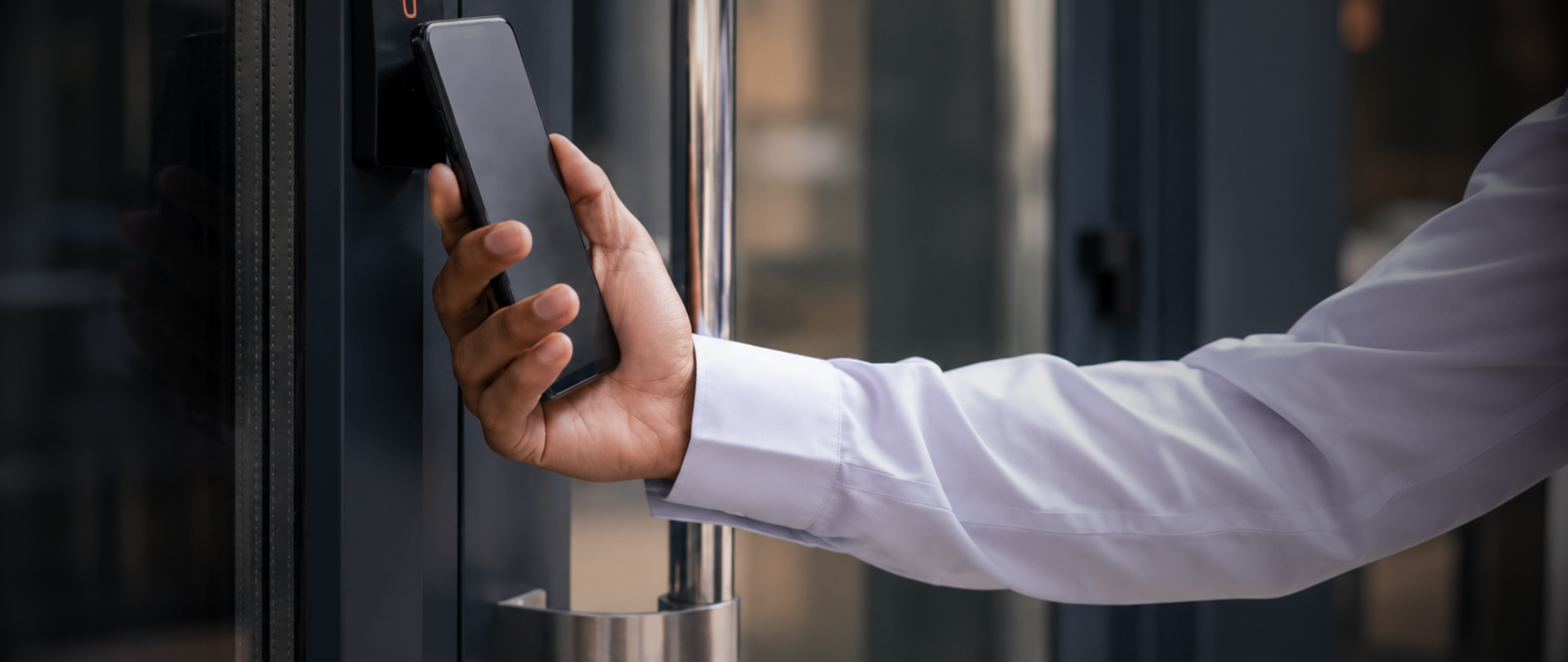
Mobile credentials use a smartphone as the access device, communicating with a reader via Bluetooth Low Energy or NFC. The credential is issued digitally through a cloud-based platform and can be provisioned or revoked remotely without anyone physically handling a card.
That remote management capability is where mobile credentials stand out in day-to-day operations. A property manager can revoke a former tenant's access the moment they vacate, from anywhere, without needing to collect anything. No gap between when someone leaves and when their access actually ends.
The benefits are just as noticeable for the people using the credential. Mobile credentials eliminate the separate key fob entirely. Users access doors with the phone they already carry and receive access immediately without visiting a management office. They do not have to manage a physical card that gets left at home or goes missing for days before anyone reports it. For buildings with regular staff changes or high tenant turnover, that reduction in credential logistics matters on both sides of the desk.
Connextivity deploys mobile credential systems through Avigilon Alta and HID Mobile Access, with integrations for ASSA ABLOY Aperio wireless locks and Schlage smart lock platforms via the ENGAGE technology. These platforms allow a single administrator to provision or update access for large groups electronically, which matters for buildings where doing that work manually is not realistic.
What Mobile Credentials Actually Require
Mobile credentials are not a feature you turn on within an existing system. They require readers that support Bluetooth or NFC, and most legacy access control hardware does not support them. Some platforms also require additional licensing to enable mobile credential functionality. If the underlying access control system is old enough, a full system replacement may be the right starting point before credential format becomes the relevant decision.
When we assess a building for mobile credential readiness, we start by understanding what is already installed and what it would take to get the system where the building wants to go. The technology works well when the foundation supports it. Getting to that foundation can be more involved than a simple reader swap.
Why Hybrid Works Best for Most Buildings
Most commercial buildings have a mix of tenants, employees, contractors, and visitors with different preferences and needs. Some users do not want to use their phones for building access. Contractors or short-term visitors may need temporary credentials without downloading an app.
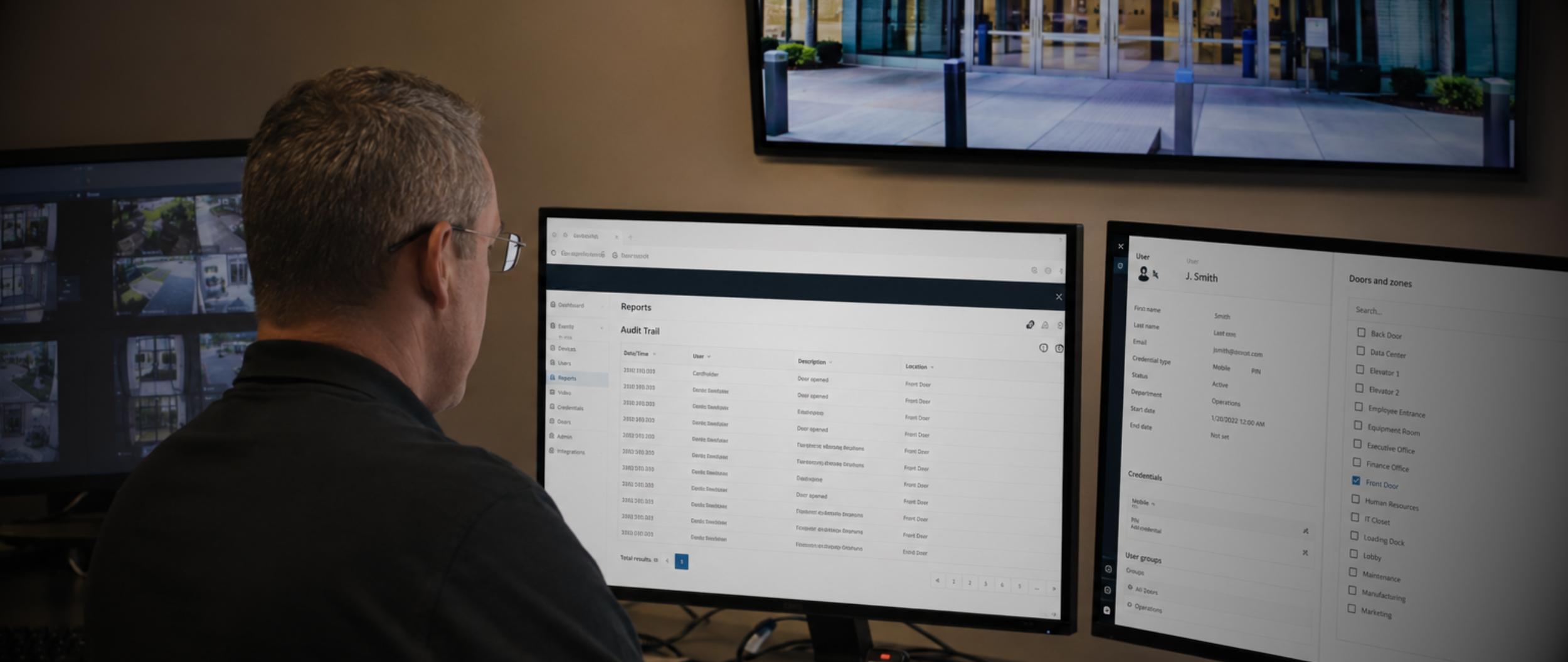
Hybrid systems from platforms like Avigilon and HID support both mobile phone credentials and physical cards or fobs through the same readers, managed from one administrative interface. Issuing and updating credentials electronically for large groups is straightforward, which removes the friction of asking an entire building population to change how they get through the door at once. Buildings can move the majority of users to phone-based access while keeping physical cards or fobs available for anyone who prefers them.
The Part That Determines Whether Any of It Works
A well-configured hybrid system is a real improvement over legacy prox cards and manual processes. But a better system does not run the program on its own.
A common issue in commercial buildings is that no one has reviewed who holds active credentials in the past year. Former employees and contractors who left two or three years ago are still in the system. There is no documented process for what happens when a tenant vacates. Access logs exist but nobody reviews them.
Good credential management starts with knowing who has active access at any given time. It means having a process for removing credentials when someone leaves, and someone actually reviewing logs on a regular basis. Whether the credential is a card or a mobile app, that operational layer is what turns an installed system into an actual security program.
If your building has not had a recent access control review, that is usually the right place to start.
FAQs
Are mobile credentials more secure than key cards?
In most commercial settings, yes. Mobile credentials use encrypted communication and are tied to a device the user actively monitors. Legacy 125kHz proximity cards have no encryption and can be cloned in seconds using inexpensive, widely available tools.
Can I add mobile credentials to my existing access control system?
It depends on your current hardware. Mobile credentials require compatible readers and sometimes additional platform licensing. If your system is older, it may need a hardware upgrade or full system replacement before mobile credentials are an option.
What is a hybrid access control system?
A hybrid system supports both physical cards and mobile credentials through the same readers, managed from a single administrative interface. It accommodates users who prefer cards alongside those who want to use their phone, without running two separate systems.
How do I know if my current key cards can be cloned?
If your building runs older 125kHz proximity cards, sometimes branded as HID Prox or similar legacy formats, they are vulnerable to cloning. A security assessment can confirm what technology you are running and whether it represents an active exposure.
What does an access control upgrade cost?
Access control installations at Connextivity start at $3,000 per door. The total depends on the number of doors, current hardware, and whether a full system replacement is needed. A site assessment is the most accurate starting point.
Final Thoughts
Mobile credentials are the better technology for most commercial buildings today. Legacy proximity cards carry a real cloning risk that mobile does not share, and managing access at scale is more practical when credentials are issued and revoked electronically. But the difference between a strong access control program and a vulnerable one rarely comes down to credential format. It comes down to whether the program is being actively run.
Connextivity provides access control design and installation for commercial buildings throughout New York City. To get a professional review of your current system, schedule a site assessment.
Related Articles