
Can a Building Have Too Many Security Cameras?
Key Takeaways
A building can have too many security cameras. Once you pass the coverage your property needs, extra cameras add cost and clutter without adding protection.
More cameras often means more overlapping views and more small feeds for one person to watch, which makes real problems easier to miss.
A 40-year review of research found cameras cut crime modestly, and worked better when actively monitored and combined with other measures than when used on their own.
The reliable way to size a system is to define the coverage and image detail each area needs, then find the fewest cameras that cover it correctly. The count is the output, not the starting point.
Systems that grow piecemeal across different vendors turn into disconnected, redundant messes. One coherent plan covers the building for less over time.
A building can have too many security cameras, and a 40-year review of research published in Criminology and Public Policy in 2019 helps explain why. It found that cameras are linked to a real but modest drop in crime, and that they work better when they're actively monitored and paired with other measures than when they run on their own. Once you pass the coverage your property actually needs, each new camera tends to add cost and clutter without adding much protection, and it can make the whole system harder to use.
Where more cameras stops helping
It's tempting to treat another camera as a free upgrade, but it rarely is. When cameras get added without a coverage plan, a building usually ends up with several of them watching the same lobby from slightly different angles while a loading dock or a back stairwell stays dark. The extra views feel thorough. What they really do is spend money on coverage you already had and leave the actual gaps open.
The research lines up with that. In the 2019 review, cameras that someone was actively watching in real time did more to reduce crime than cameras that only recorded for later. Combining cameras with other measures like better lighting or on-site staff also beat using them alone, and the reductions were strongest in defined spaces like parking lots. None of that rewards volume. It rewards putting the right camera on the right problem and making sure someone can act on what it sees.
What a wall of tiny feeds does to the person watching
This is where too many cameras breaks a security operation in practice. A guard watching 40 cameras on a monitor built for far fewer is not really watching any of them. Each feed shrinks to a small tile, and half of them overlap because nobody mapped the coverage before mounting hardware. At that size, a person cannot reliably catch a problem as it happens, let alone identify a face or a plate. The detail isn't on the screen to see.
It gets worse without analytics. The guard is left scanning dozens of small, repetitive windows, hoping to land on the one that matters. That kind of watching wears people down fast, and fatigue is when things slip past. More cameras on that setup give the guard more to miss, not more to work with.
The costs that scale with every camera you add
Every camera you add is another device to power and cable, more footage to store and license, and one more thing that can eventually fail. Storage and bandwidth climb with the count and the resolution, and upkeep climbs with them, since a bigger system has more parts that break.
There's a legal side too. Cameras that record areas they shouldn't, or that hold footage longer than your retention policy allows, can turn into a liability instead of protection. The rules vary by property type and by state, so it's worth confirming what applies to your building rather than assuming. A large camera count can also create a false sense of security that delays the physical fixes doing the real work, like better lighting and controlled entry.
How camera systems turn into a mess over the years
A lot of oversized systems grew into that state one camera at a time. They get added by different installers at different quality levels, and after a few years you're left with a mix of working cameras, dead ones, and gear on separate platforms that don't talk to each other.
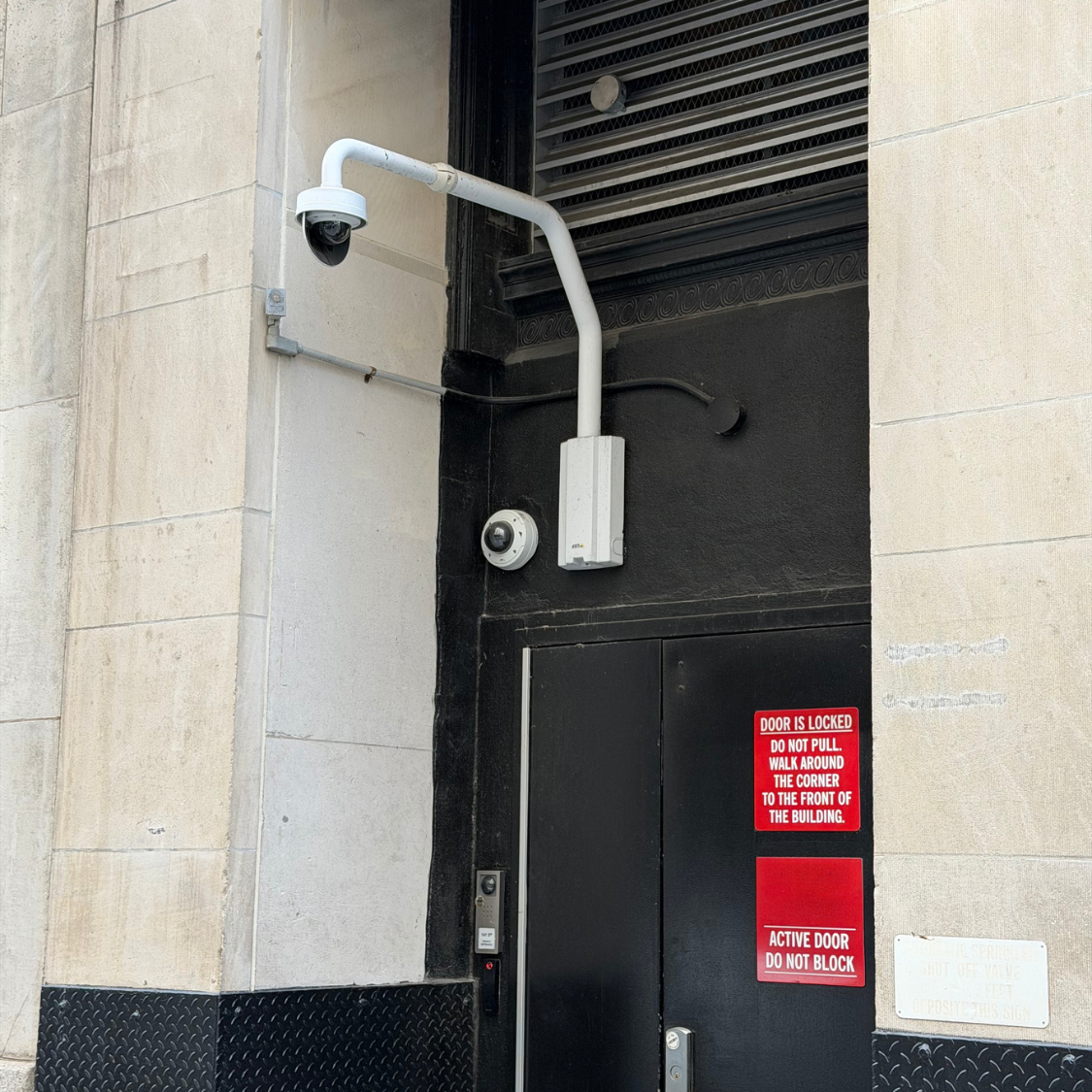
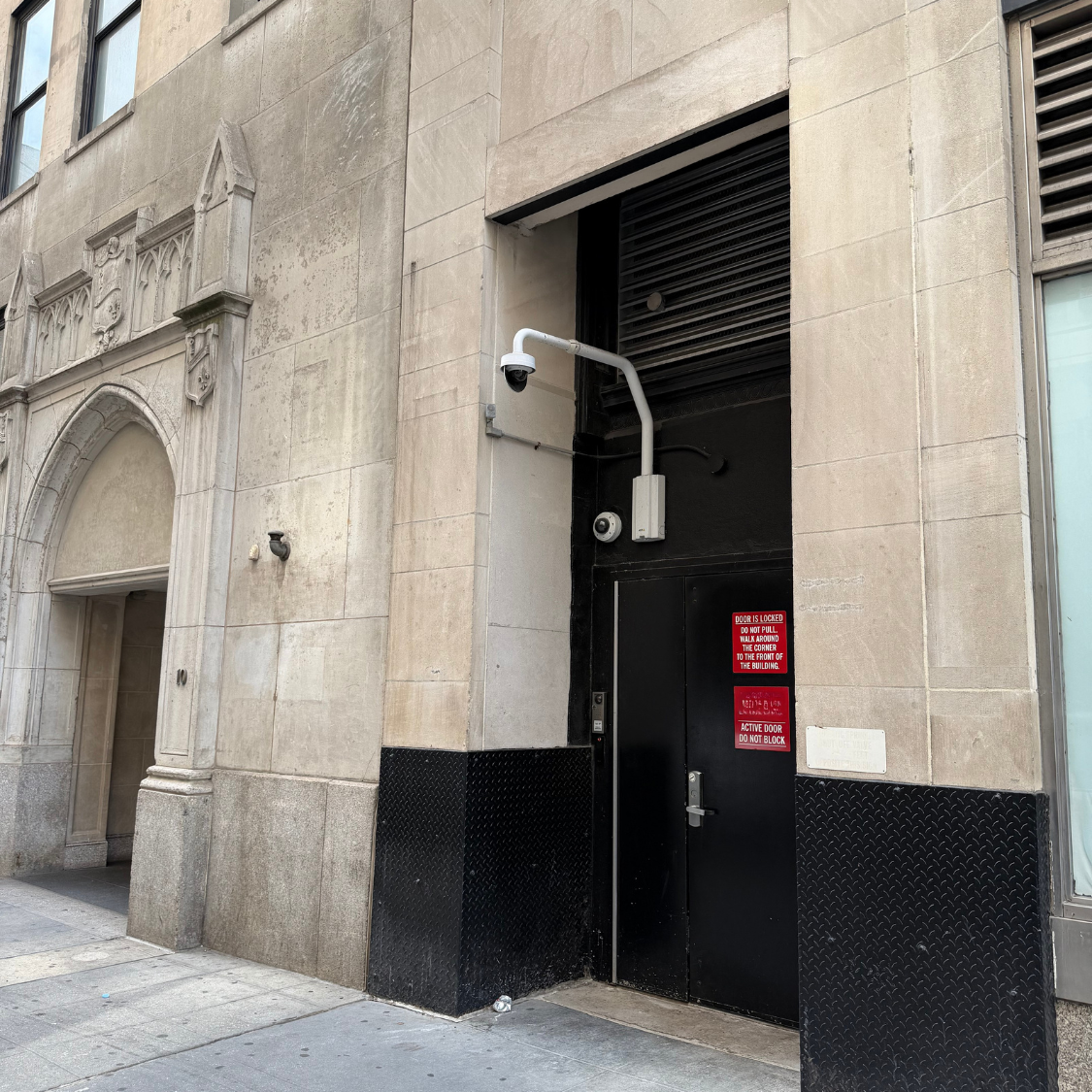
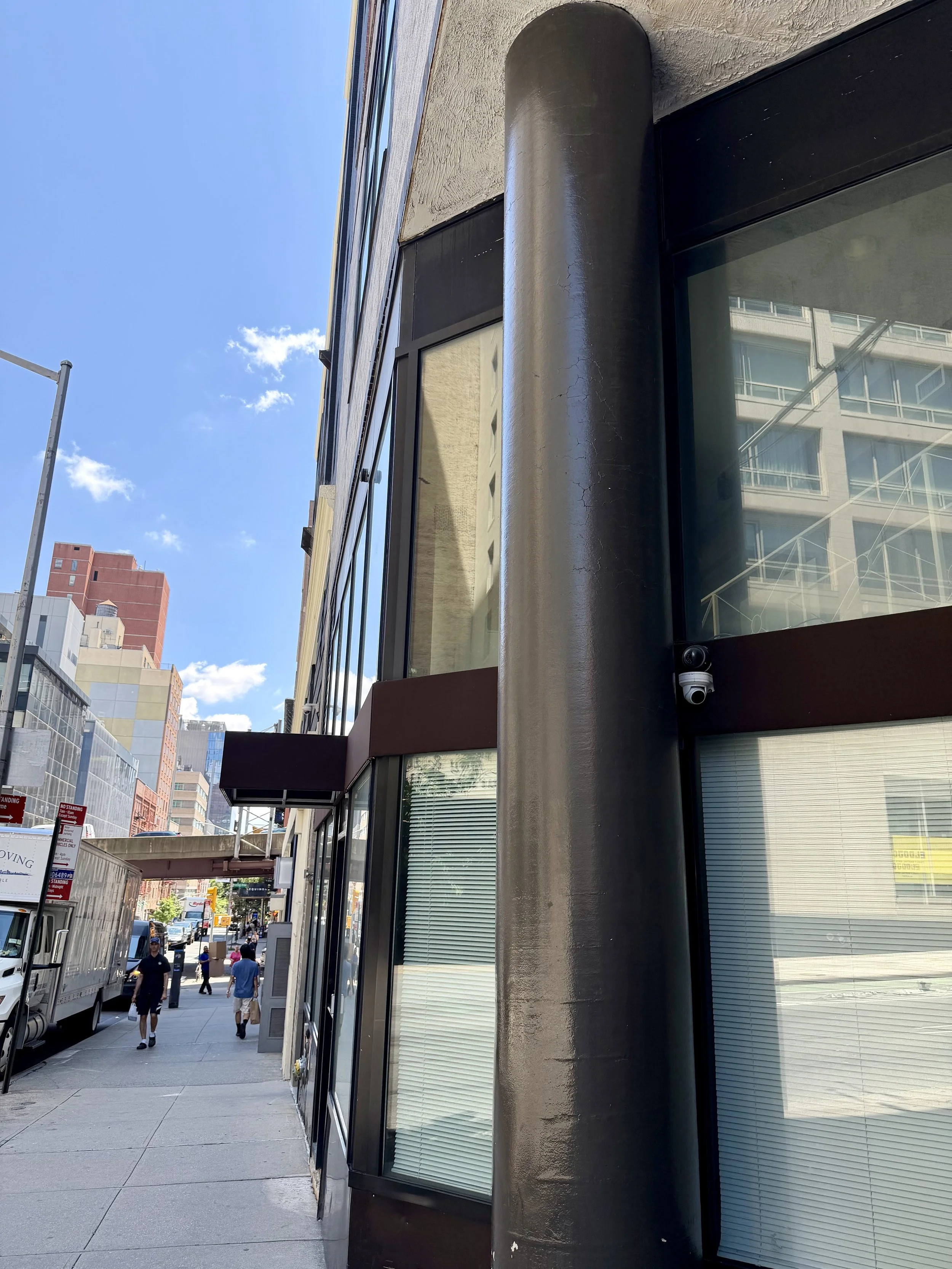
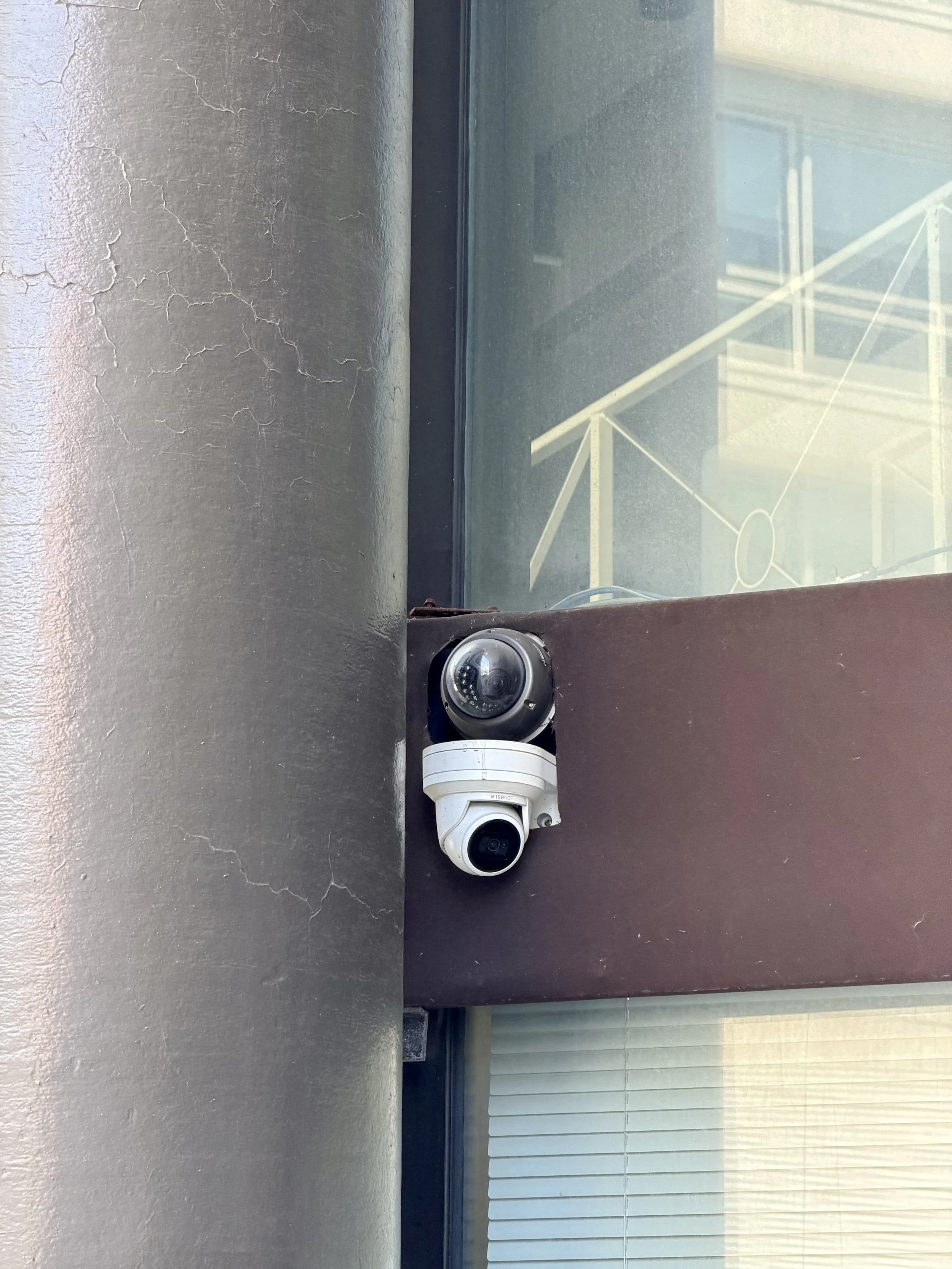
You can see the early version of this on the street. Walk past enough service entrances in the city and you'll find two cameras crammed onto one back door, mounted on an afterthought bracket with conduit running across the stone, clearly bolted up at different times by different hands. Picture that same habit playing out across a whole building over a decade.
We've worked on buildings where security was added in layers over time, each addition its own island. To pull footage, someone had to switch between servers depending on which camera they wanted. When a camera failed, a new installer was sometimes told to just cover that field of view, so a replacement went up beside the dead one instead of replacing it. A different tenant or department would want their own cameras and add a parallel system. The result is redundant hardware and several logins, with no single clear picture of the building.
There's a practical lesson in it. Doing the work once, to a plan, usually costs less than paying installers to keep coming back, and a system designed and installed to one plan actually covers the building. However, if your cameras have piled up across vendors and eras, consolidating them through a legacy system upgrade onto one platform is often a bigger improvement than any new camera, and getting those separate systems onto shared network infrastructureis part of the same fix.
Size the system by coverage and detail, not camera count
The honest answer to how many cameras a building needs is that there isn't a fixed number, and anyone quoting one before seeing your site is guessing. It depends on the size and construction of the building, where people get in, and what you're trying to protect.
The reliable way to size a system works in the other direction. You start by defining the coverage each area needs and the level of detail it has to deliver, since a camera watching a wide lobby for general awareness is a different requirement than one that has to identify a face at a doorway or read a plate at a gate. That detail depends on resolution, lens, and distance, so the image quality each area requires shapes what equipment can actually do the job. Only then do you work out the fewest cameras that cover those areas correctly at the detail you need. The count comes out of that process, it doesn't lead it.
Where live eyes can't keep up, analytics can flag the events worth a look, which is what makes an offsite monitoring service or an on-site guard effective instead of overwhelmed. That coverage-and-detail approach is the core of a proper security assessment, and it's why we define requirements before anyone talks about a camera system.
Final Thoughts
The right number of cameras is an outcome, not a starting point. It falls out of a plan built around your building, the areas that need coverage, and the detail each one requires, and it's almost always fewer, better-placed cameras than a count-first approach would put on the wall. Cameras are one layer of a security program, and the 2019 research makes the same point in its own words, that cameras shouldn't stand alone. They work best when that layer is designed rather than accumulated.
If your building has been adding cameras for years and nobody has stepped back to look at the whole picture, that's usually the moment a fresh set of eyes pays for itself. Schedule a site assessment with Connextivity and we'll define what your building actually needs before recommending a single camera.
FAQs
How many security cameras does a commercial building need?
There's no universal number. It depends on the building's size, layout, construction, entry points, and what you're protecting. The reliable way to size a system is to define the coverage and image detail each area needs, then work out the fewest cameras that cover those areas correctly.
Can a building have too many security cameras?
Yes. Extra cameras often duplicate coverage you already have while real blind spots stay open, and they can overwhelm whoever is monitoring. They also add storage, licensing, and upkeep cost.
Do more cameras mean better security?
Not on their own. A 40-year review of research found cameras reduce crime modestly and work better when actively monitored and paired with other measures than when used alone. Placement and detail matter more than raw count.
Can you estimate the number of cameras based on building size?
Building size can help with early budgeting, but square footage alone cannot determine the right camera count. Entry points, sight lines, lighting, camera placement, and the image detail required in each area all affect the final design.
What makes a camera system effective?
Coverage of the areas that matter at a usable level of detail, some form of monitoring or analytics so footage gets acted on, and one integrated system rather than several disconnected ones.
Related Articles
Why Your Construction Site Needs More Than Cameras: how we approach protection as engineering instead of a pile of hardware.
Security Assessments: the requirements-first process that decides what your building needs before any equipment goes in.
Security Cameras: how we design and install camera coverage once the plan is set.