
Why Getting Three Bids Isn't Due Diligence
Key Takeaways
Three security bids priced around the same hardware usually differ on how much each contractor quietly left out, not on approach.
The cheapest bid is often the one that assumed the least. Exclusions like power, internet, and cabling become billable extras after you sign.
Real due diligence defines a coverage-driven scope first, so the bids can be measured against one standard.
Comparing security system bids only works once every contractor prices the same scope.
Comparing security system bids feels like due diligence, but three quotes priced around the same hardware usually differ mostly on how much each contractor left out. Without a scope you defined first, every bid describes a slightly different project, and you're comparing prices instead of approaches.
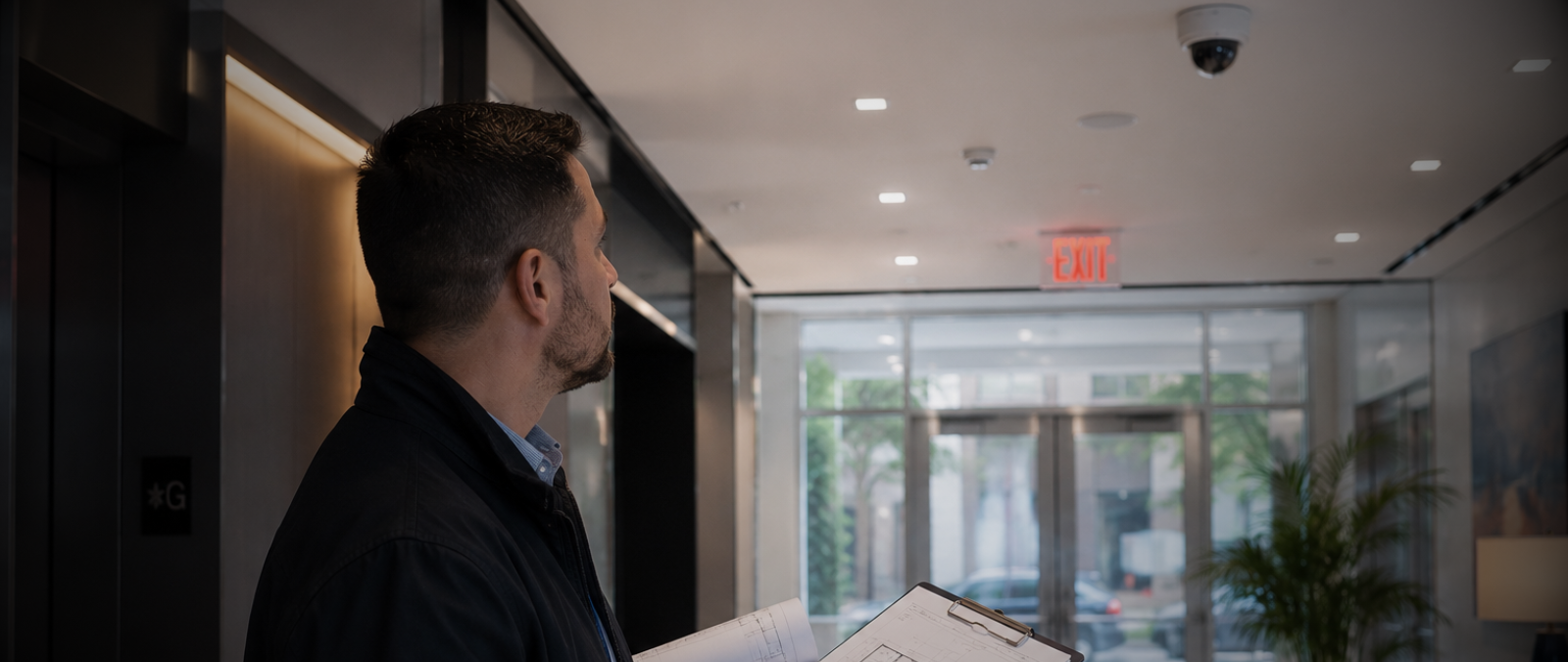
Three quotes usually mean three different projects
Whether bids are comparable depends on what the contractors were handed to bid on. With a clear requirements document, everyone prices the same work. Without one, each installer fills the gaps with its own assumptions and protects itself with standard exclusions. Those assumptions hide in places easy to skim past. Camera count and placement, resolution and usable detail, footage retention, network and cabling work, licensing, labor, and warranty coverage can all vary from one bid to the next. Two quotes can match at the bottom line and still describe very different systems, because one assumed far less work.
The exclusions are usually where the money hides. A client once accepted a reasonable-looking bid to install intercoms across several buildings. The exclusions the installer wrote in included power, internet, and wiring, so all of it had to be ready at each location before the contractor started, and everything else was billable. In a multi-building setup that's a serious gap, since intercoms have to communicate with each other and with whoever answers them, which takes data, connectivity, and power between buildings. The project needed far more than intercom installation, and the real cost surfaced only after the low bid was chosen.
What real due diligence looks like
Real due diligence flips the order. You define the scope first, then have every contractor bid against it. It sets where cameras need to see and how much detail they need to capture, often measured as pixels on target. It also sets retention, cabling and labeling standards, mounting details, drawings, the commissioning criteria that prove the system works before final payment, and warranty terms. Those standards produce a system engineered for the specific building, which is where engineering and commissioning matter more than the install.
Distance is a common miss. Mount equipment farther from the closet than the cabling or manufacturer's power and data limits allow, and it doesn't run right. The contractor then quotes more gear, more cabling, and time to redo the work, and the price climbs past the original number. This comes up constantly when modernizing cameras over aging coax, where a scope that specifies pathways and distances catches the problem before it becomes a change order.
The protections a scope writes in
A scope written on your behalf also includes protections most boards don't know to request. Two stand out. The first is wiring type and methodology, meaning cable quality, how it's run and secured, pathway capacity, and details like whether pull strings get left for future work. Cabling is buried in walls and rarely inspected, so it's easy to shortcut and costly to fix. Specifying it protects the part of the system you never see but always rely on.
The second is ownership. The scope should state plainly that you own the system and its administrative logins. Plenty of owners find out only later that the installer holds the admin credentials, which means paying that company for every change or being stuck with them. A scope can also lock in open architecture, warranty specifics, and documentation, so one vendor isn't required to expand the system later.

Why the reviewer shouldn't be selling you the install
There's a reason the firm defining your scope shouldn't also be hoping to win the install. When the company running your walkthrough sells hardware, the design follows the incentives. A complimentary vendor design often specifies the brand with the best margins for that vendor rather than the mix that fits your building, and can call for more equipment than the space needs.
An independent review takes that pressure off. That's the structure we use at Connextivity. The first phase is an assessment that produces the scope or RFP. The second is oversight, where we collect the bids, level them against that scope, and give you a clear read on how each one compares. Because we're evaluating the work rather than bidding to perform it, the recommendation stays independent.
Final Thoughts
Three bids tells you who's cheapest for their own version of the job. Due diligence tells you who's strongest for the job you actually defined. The scope is the real deliverable. Once it exists, every contractor is finally pricing the same work.
If you're holding a stack of quotes for a camera project or a full system, the missing piece is the scope to measure them against. A Connextivity security assessment gives you that scope and an independent read on which bid holds up. Schedule an assessment and get your bids leveled by a firm that isn't bidding on the install.
FAQs
Is getting three bids enough for due diligence?
Not on its own. If no one defined the scope first, each contractor priced their own assumptions, so you're comparing three different projects rather than three versions of one.
What should a security system scope include before I request bids?
A coverage map with detail requirements, retention length, cabling and labeling standards, mounting and drawing requirements, commissioning criteria, and warranty terms. It should also state who owns the system and its logins.
Can the company that installs the system also design the scope?
It can, but it needs to be done carefully. The scope should be clearly defined and guided by a security assessment engagement that justifies system design, needs, and placement, and keeps the scope focused on your building's needs. Otherwise, a "free security assessment" can quickly turn into a sales quote.
Related Articles
Complete Guide to Access Control Systems in NYC: Why security engineering firms own assessment, design, and commissioning, not just installation.
What Is Physical Security: How to think about protection as an engineered system rather than a set of products.
Security Assessments: What an independent assessment covers and how it produces the scope your bids get measured against.
