
What the Hikvision and Dahua Import Ban Means for Your Cameras
Key Takeaways
The June 2026 FCC action extended an existing ban to older Hikvision and Dahua models, so previously approved equipment can no longer be imported for covered security uses.
You can keep using cameras you already own. No federal order forces private buildings to remove installed equipment.
The real problem is support. Replacement units, spare parts, and warranty swaps are getting harder to source through U.S. suppliers.
Security-conscious enterprise and government clients were already replacing these cameras over cybersecurity concerns. The ban forces the issue for everyone else.
Many affected cameras don't carry the Hikvision or Dahua name, because both companies sell through dozens of rebranded labels.
On June 26, 2026, the FCC expanded its Hikvision and Dahua import ban to cover older equipment, not just new models, closing a loophole that had let previously approved gear keep entering the country for nearly four years. If your building runs cameras from either brand, or from one of the many labels that rebrand their hardware, this changes how you plan for the next several years.
You don't have to rip anything out tomorrow. Getting parts, replacements, and support for these systems through legitimate U.S. channels is about to get much harder, and that is the part most owners haven't thought through.
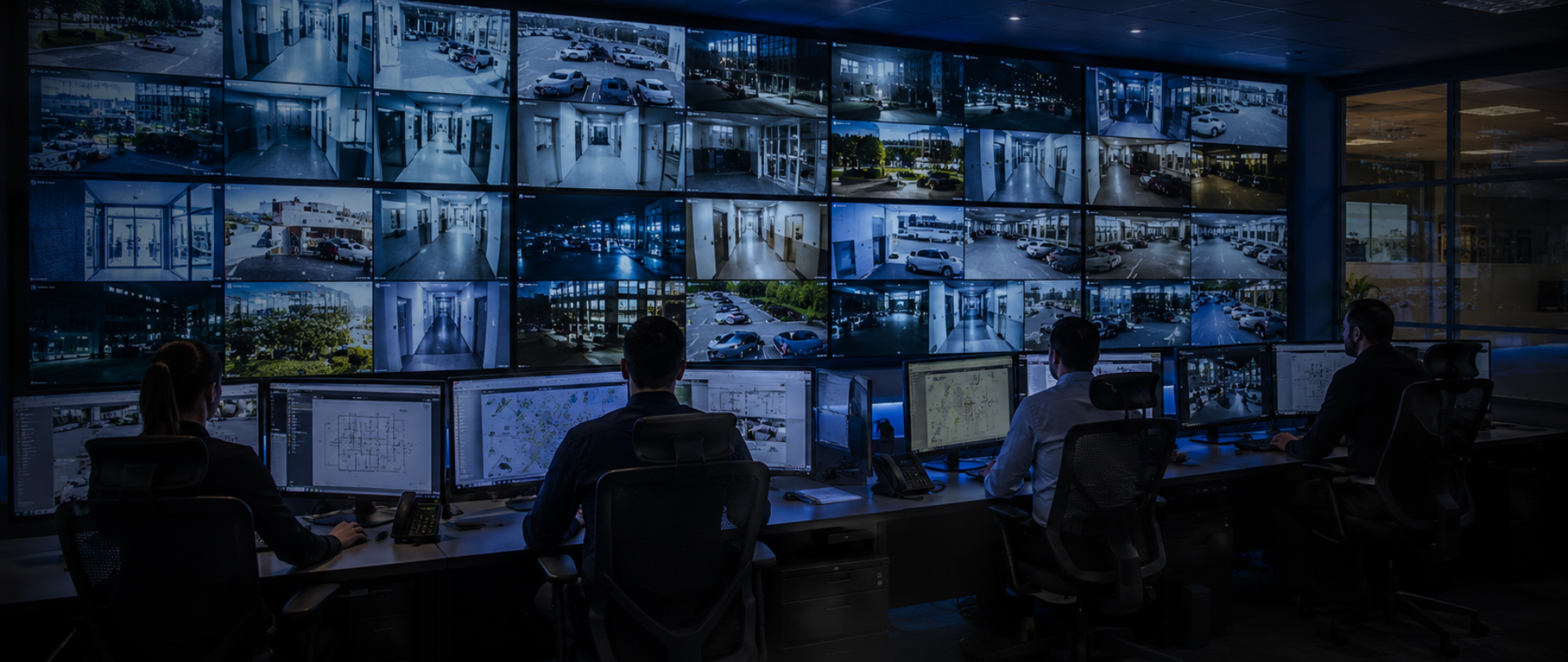
What the Hikvision and Dahua import ban actually covers
The restriction didn't appear overnight. The FCC added Hikvision and Dahua to its Covered List of national security risks back in 2021, alongside Huawei, ZTE, and Hytera. In November 2022, the agency stopped approving new models from those companies under the Secure Equipment Act. The catch was that anything approved before that cutoff could still be imported and sold, and it was, in large volumes. The order that took effect in early July 2026 closed that gap.
Scope matters here, and it's where a lot of coverage gets sloppy. The ban applies to equipment used for public safety, security of government facilities, physical security surveillance of critical infrastructure, and other national security purposes. That is the FCC's own language, and in practice it covers most commercial and institutional camera deployments. What the order does not do is force you to tear out cameras you already own. Existing, legally installed equipment can keep running. The pressure shows up later, when something breaks or you need to expand.
Why parts, replacements, and support get harder now
An import ban sounds abstract until a camera fails. When it does, the replacement has to come from somewhere, and the supply of Hikvision and Dahua hardware coming into the U.S. is drying up. New units, spare parts, and warranty replacements all move through the same import channels the FCC just closed for covered uses. Distributors delist the products and stock runs out. What's left moves gray-market, with no warranty and no assurance it wasn't tampered with in transit.
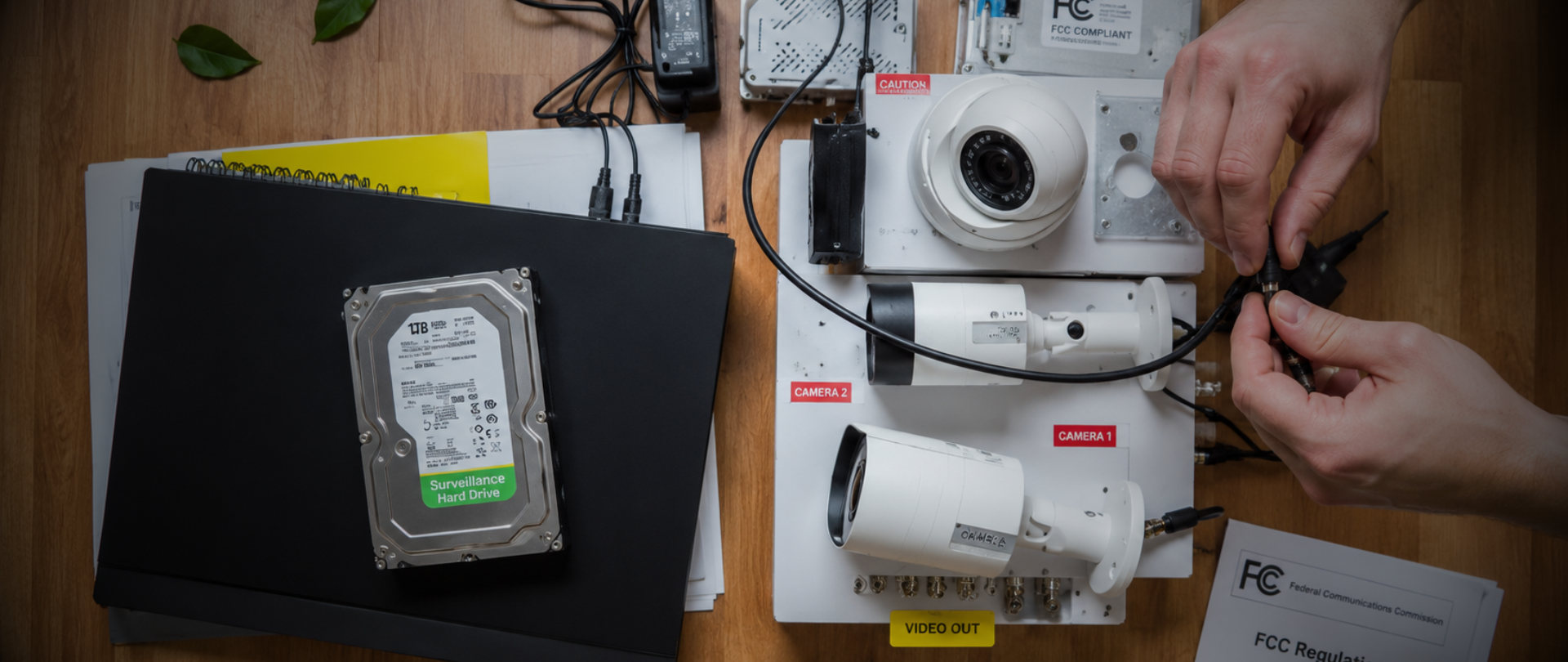
Support degrades on a similar curve. Firmware updates and security patches, plus technical help when something goes wrong, all depend on a manufacturer relationship that U.S. integrators are walking away from. A camera that stops getting security updates becomes a liability on your own network, which is the exact risk the ban was written to address.
Plenty of owners assume they can manage this themselves, or that the security concern is overblown. In our experience that's the most common misread. These cameras have documented vulnerabilities, and an unpatched unit sitting on your network is an exposure.
Your cameras may be covered even if the label isn't
Here's the part that catches people. Many cameras that fall under this ban don't say Hikvision or Dahua anywhere on them. Both companies manufacture hardware that gets rebranded and sold under a long list of other names, and a fair number of buyers have no idea what they actually own.
We've walked into buildings where the cameras carried an unfamiliar brand and turned out to be Hikvision or Dahua underneath. The owner bought them in good faith from an installer who either didn't know or didn't say. If you can't confirm the true manufacturer of your cameras, you can't confirm whether you're affected, and for anyone touching government work or federal funding, that uncertainty is a problem on its own.
Who feels this first
For a lot of security-conscious organizations, this isn't news. Federal agencies and contractors have been barred from this equipment since the 2019 NDAA under Section 889, and the higher end of the commercial market didn't wait for a ban either. In our experience, enterprise and institutional clients who take cybersecurity seriously have been pulling Hikvision and Dahua out for years already, on security grounds alone. The ban is mostly catching the rest of the market up to a decision those organizations made a while ago.
Where these cameras still turn up is the budget end. They're cheap, which is exactly why they spread, and it's usually lower-budget projects that now face the hardest replacement math. Higher-end and government work either already moved off them or came in under a mandate to do so.
Federal funding raises the stakes further. Federal money generally can't be spent on banned equipment, which rules it out for public-adjacent projects like a school. The reach is wider than most people expect. Section 889 covers federal grant and loan recipients, not just contractors, and on the contractor side it can apply to covered equipment anywhere in your systems, even gear bought years before the rule existed. If your organization takes federal money or sits downstream of a federal contract, covered cameras can put that funding or that work at risk.
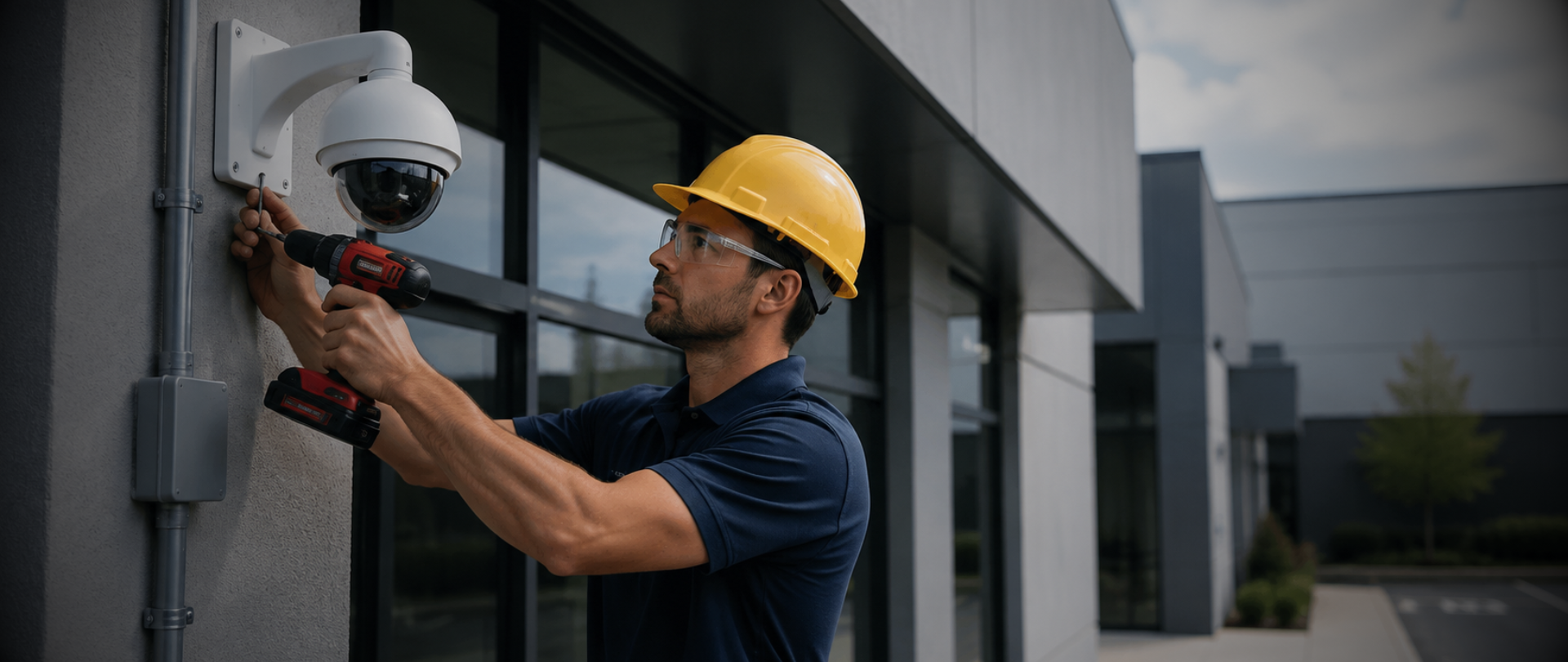
What replacing a covered system actually involves
Replacing a banned system well is mostly about sequencing. We do it in phasesso the building keeps coverage while cameras are cut over one zone at a time, rather than going dark during the switch. The recording and network side generally has to bereplaced outright, since that's where a lot of the compliance and cybersecurity risk lives. Existing cabling can often be reused, though some sites need it replaced depending on condition and how it was run.
The equipment that goes back in has to clear two bars. It has to be compliant, and it has to be supportable. Axis and Avigilon are the two compliant lines we work with most, and IQSIGHT, formerly Bosch Video Systems, offers an NDAA- and TAA-compliant camera range as well. These are also better cameras. They're built to commercial and enterprise grade, with the kind of multi-year manufacturer warranties budget brands rarely match. And they keep getting firmware and security support, which is the exact thing the banned gear is losing.
Which line fits depends on the building, the use case, and the budget, which is why the first step is an assessment rather than a product pick. An installer sells you cameras. The better question is what your specific site needs, and that answer comes before any brand does.
Final Thoughts
The Hikvision and Dahua import ban isn't a reason to panic, and it isn't something to ignore until a camera dies on a Friday night. The equipment you own today keeps working. What changes is your runway. Every month, replacement parts and support get scarcer, and the cost of waiting climbs. The buildings that handle this well find out what they actually have, then plan a replacement on their own schedule instead of an emergency one.
If you're not sure whether your cameras fall under the ban, or you want a replacement plan that keeps your building covered the whole way through, a security assessment is the place to start. Connextivity evaluates what you have, confirms the true manufacturer behind every device, and lays out a compliant path that fits your site and budget.
FAQs
Do I have to remove my Hikvision or Dahua cameras right now?
No. The FCC order does not force private buildings to tear out equipment they already own. The issue is future support, since replacements and parts for covered uses can no longer be imported through compliant U.S. channels.
How do I know if my cameras are actually Hikvision or Dahua?
You often can't tell from the label, because both brands are sold under many rebranded names. Confirming the true manufacturer usually takes a technical review of the hardware and firmware, which is part of a security assessment.
What cameras are compliant replacements?
Axis and Avigilon are two widely used compliant lines, and IQSIGHT, formerly Bosch Video Systems, offers an NDAA- and TAA-compliant range. The right choice depends on your building and use case rather than a single default brand.
Does this ban affect my business if we don't do government work?
It can. The FCC's covered uses reach most commercial and institutional surveillance, and many enterprise clients already moved off these brands for cybersecurity reasons. Section 889 also reaches federal grant and loan recipients and companies downstream of a federal contract, which pulls in schools, nonprofits, and businesses that don't consider themselves government work.
Is it cheaper to just keep repairing the system I have?
Usually not, once you factor in shrinking parts supply, lost warranty coverage, and the risk of running unpatched cameras on your network. A phased replacement often costs less than a rushed one after a failure.
Related Articles
Security Camera Installation NYC: How we design compliant camera systems around actual risk, using only federally approved manufacturers.
Legacy System Upgrades: Our approach to replacing outdated or non-compliant systems without tearing out everything at once.
NYC Apartment Security and Camera Laws: How camera compliance works for residential buildings in New York City.