
How Often Should a Commercial Building Undergo a Security Assessment?
Key Takeaways
Annual assessments are a reasonable baseline for most commercial buildings, but annual alone is not a complete strategy
Specific triggers, including incidents, renovations, staff changes, and system upgrades, should prompt an assessment outside the regular cycle
Many buildings don't realize a security assessment is even an option, and instead rely on installers or salespeople to identify the right solution
In New York City, environmental conditions and higher rates of vandalism mean exterior equipment degrades faster and needs more frequent attention
A real security assessment is neutral and conducted by certified professionals; its goal is to inform, not to sell
Investing in new security technology without an assessment first means solving the visible problem while missing the real one
Most Buildings Assess Once. Usually After Something Goes Wrong.
Most buildings arrive at a security assessment the same way: something goes wrong. A break-in, a near-miss, a liability concern flagged by insurance. Those are the moments that tend to force the conversation, and while reacting to an incident is better than never acting at all, it's not a strategy.
The more useful question is understanding what timelines and specific events should be triggering an assessment, and what it costs when the gap between your last review and your current risk profile stretches longer than it should.
Annual Is the Baseline, Not the Ceiling
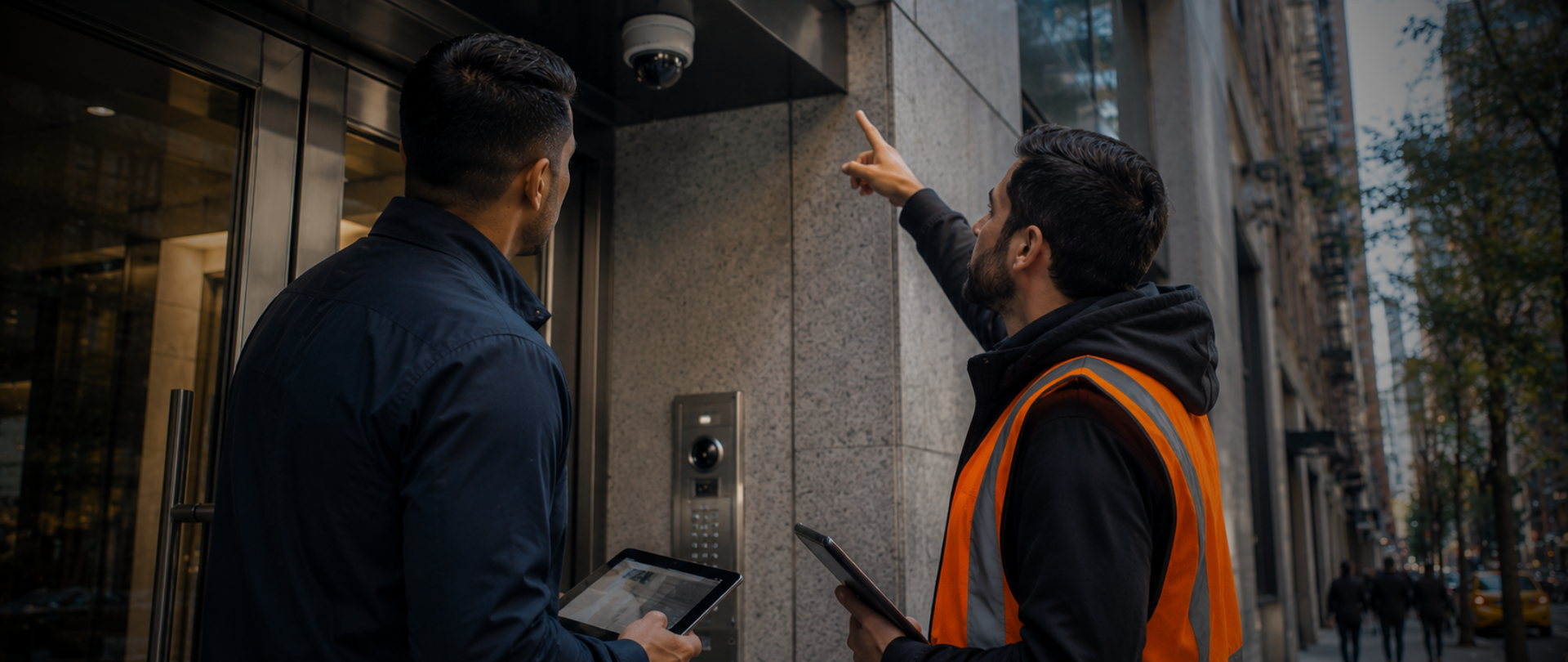
ASIS International is a global professional organization for security professionals with more than 34,000 members across 158 countries. It issues certifications, standards, and guidelines for the security industry and offers four globally recognized credentials. Its Certified Protection Professional (CPP) is ASIS's highest board certification and widely considered the gold standard in security management. ASIS references periodic security reviews as a foundational component of any risk management program, and for most commercial buildings, annual is a reasonable starting point.
Annual assessments create a consistent benchmark. They catch gradual drift, the kind of changes that don't happen overnight but accumulate enough over twelve months to create real gaps: camera firmware that hasn't been updated, stale credentials still active in an access control system, lighting that was adequate when installed but has since degraded. None of these announce themselves.
Where annual becomes a problem is when it's treated as a ceiling rather than a floor. A building that had a significant renovation in the spring, brought on two new tenants over the summer, and replaced its access control system in the fall shouldn't wait until December to understand how those changes affect its security posture.
The more common problem, though, is that many building owners and managers don't know a formal assessment is an option at all.
"Most don't know an assessment is an option," says Kevin Chen, Founder and CEO of Connextivity. "They assume the salesperson, estimator, or installer will figure out what's needed as part of the job. That's not what those people are there to do."
What's Actually Happening When You Skip the Assessment
The gap between a system that was sold and a system that was designed shows up in the details, and sometimes those details are significant.
"Usually the call comes after an incident," Kevin notes. "But more often than people realize, they don't know an assessment is even an option. So they call an integrator who swaps out a lock or sells them a new system without ever looking at the actual problem. We had a building where people kept breaking in through a double set of doors. The building changed the electric strikes multiple times and nothing worked. When we looked at it, we suspected it wasn't all forced entry. Turned out there were unauthorized duplicate fob copies being used to access the front doors, the rear entrance, and the package room. We recommended glass frosting on the doors, better locking hardware, and more secure fob technology."
No installer swapping out hardware would have found that. An assessment did.
The same pattern shows up with equipment that looks operational but isn't. "Cameras and door locks can fail silently, and nobody knows until something happens, which means failures get discovered after an incident rather than during routine inspections," Kevin adds. "The same goes for alarm systems. Without regular testing, sensors and panels can degrade to the point where they're not providing real coverage anymore."
For a closer look at how these failures break down across physical, technical, and operational controls.
When to Assess Outside the Regular Cycle
After an incident or near-miss. Any unauthorized access event, theft, or situation that almost became one warrants an immediate review. The goal is to understand which control failed and what needs to change.
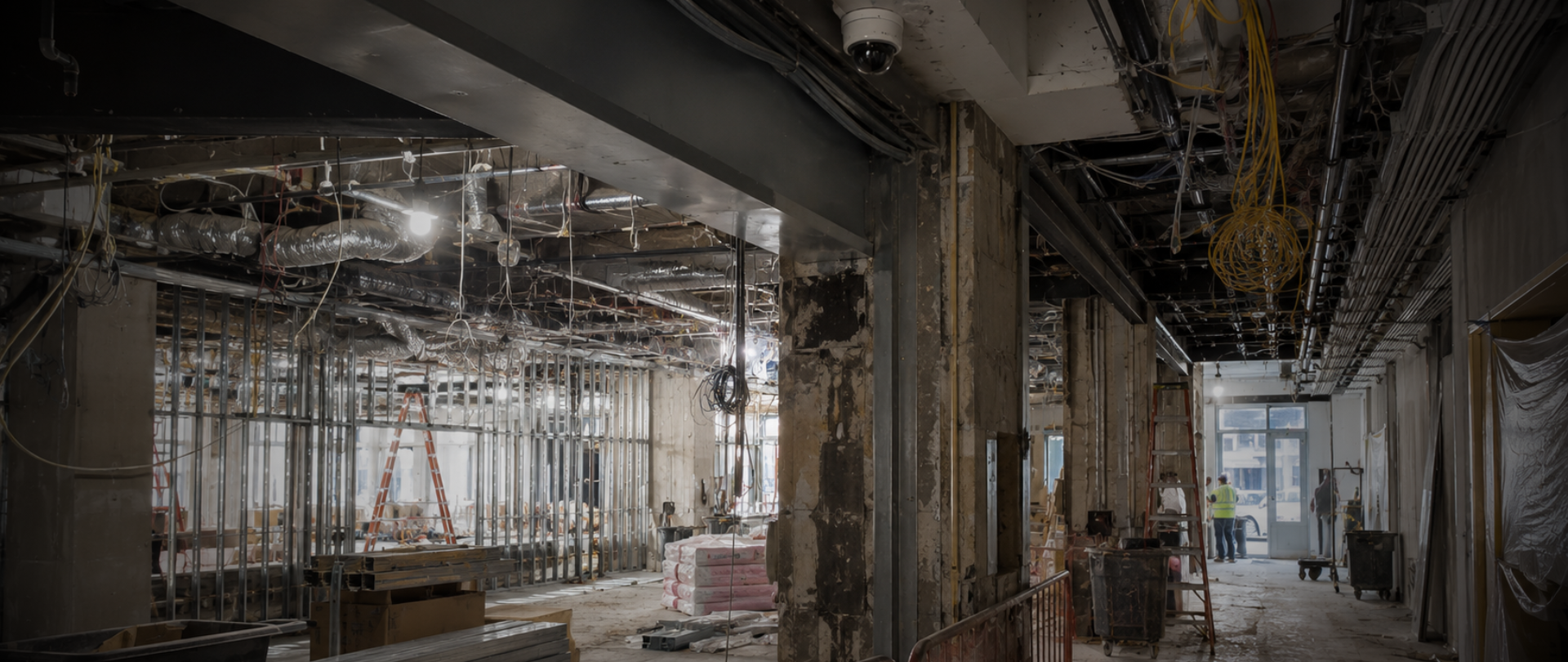
Before and after construction or renovation. Renovations change sight lines, create temporary access points, and often disable existing infrastructure in the process. A pre-renovation assessment helps you plan for temporary gaps. A post-renovation assessment confirms that controls are back in place and correctly positioned. See our post on why construction sites need more than cameras for more on managing security through active construction.
When new tenants or significant staff changes occur. New occupancy affects access control requirements and common area usage patterns. Significant staff turnover means access lists need to be audited and response protocols reviewed.
When high-value assets or elevated risk are present. "Any building with high security needs, high-value assets, or a high likelihood of being targeted should be assessed right away," Kevin says. "A lot of these facilities already have a dedicated security team, but that team is usually focused on executive protection or personnel security. The building's physical systems often go unmaintained, and the two sides rarely talk to each other. Most security systems get treated as reactive tools: they record, or they trigger a review after the fact. We push hard for systems that give proactive warnings before something happens, not just documentation after."
Before a major security investment. If you're planning to upgrade your commercial security camera system or bring in new access control technology, an assessment should come first. Without one, purchasing decisions are based on what exists rather than what is actually needed, and that tends to produce systems that are correctly installed but incorrectly scoped.
The New York Factor
Commercial buildings in New York carry conditions that push assessment frequency in a specific direction, beyond just occupancy complexity or tenant turnover.
"Between the dust, debris, pollution, and vandalism exposure, exterior cameras, intercoms, and sensors in New York take more of a beating than in most other markets," Kevin notes. "That degradation is gradual, which is exactly why it gets missed."
New York also has a large inventory of older buildings with legacy infrastructure: camera systems that haven't been meaningfully updated, intercom setups that predate IP technology, and access control running on credentials that were never properly maintained. In those buildings, the question of how often to assess often comes second to what a first proper security assessment would actually find.
FAQs
What's the minimum assessment frequency for a commercial building? Annual is the industry baseline. Buildings with active change, including construction, tenant turnover, staff transitions, and new systems, should assess more frequently based on specific triggers rather than just the calendar.
Does every assessment need to be a full formal process? Not necessarily. A comprehensive assessment covers physical, technical, and operational controls together. In between, targeted reviews of areas that have changed can be appropriate depending on what has shifted since the last review.
How much does a security assessment cost? Connextivity's assessments start at $2,000. The more practical comparison is against the cost of a reactive response after an incident, or a system investment that was scoped for the wrong problem.
Who should conduct a security assessment? Look for a CPP (Certified Protection Professional) or CSPM (Certified Security Project Manager). The CPP is issued by ASIS International and the CSPM by the Security Industry Association. Both credentials indicate the assessor has met a documented professional standard, not just general contracting or installation experience.
What makes a real assessment different from what an installer offers? "A security assessment is a neutral, holistic analysis of physical security vulnerabilities conducted by certified professionals," Kevin says. "What a salesperson or installer provides is a different thing entirely. The goal of a real assessment is to give the client an honest picture of where their security program actually stands, not to sell them something."
Final Thoughts
The buildings with the strongest security programs treat assessment as a process, not a single event. Annual is a floor. Specific triggers matter as much as the calendar. And in New York, where environmental conditions accelerate wear and buildings change faster than most markets, the gap between the last assessment and current risk tends to widen faster than managers expect.
If the last formal review of your building was driven by an incident, or hasn't happened yet, the gaps in your current program are likely larger than you'd expect. Finding them costs significantly less than discovering them the other way.
Wondering If Your Building Is Overdue?
That question comes up more often than you might think, and it's a reasonable place to start. Connextivity conducts security assessments for commercial properties, mixed-use buildings, and institutional facilities across New York. Our team holds CPP and CSPM certifications, and every assessment comes with a written report and a prioritized action plan, not a sales pitch.
If you'd like an honest look at where your building stands, get in touch.
Related Articles
Physical, Technical, and Operational Security Assessments Explained
Why Your Construction Site Needs More Than Cameras
Commercial vs. Residential Security Cameras: What's Actually Different
Elevator Access Control in NYC
What to Do If Your Business Is Running Hikvision or Dahua Cameras
